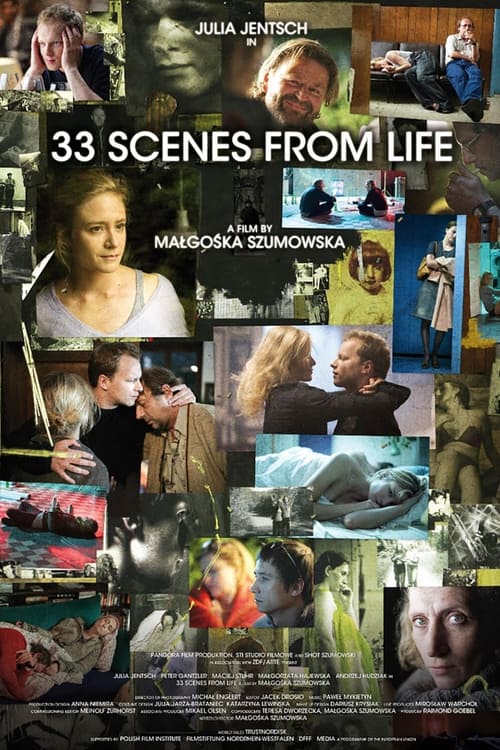
33 Scenes from Life
2008
No user ratings available yet
Representation score: 7.3 out of 10

Representation Score
Good
1991
Director
Piotr Szulkin
Runtime
84 minutes
Average Rating
No ratings yetNew Showbiz Analysis
Femina is a psychological character study that centers on female subjectivity. It succeeds in challenging traditional patriarchal structures by focusing on the protagonist's internal, fragmented experience. However, the film lacks overt markers of racial or LGBTQ+ diversity. The narrative appears deeply rooted in a specific, homogeneous cultural context, which limits its broader demographic representation. Ultimately, the film's strength lies in its narrative architecture. It favors individual existentialism over the reinforcement of conventional familial or institutional structures.
Category Breakdown
The film focuses on the protagonist's internal psychological state and domestic dissatisfaction. There is no explicit evidence of non-straight relationships or queer intimacy within the narrative.
The story centers entirely on Bogna, a woman navigating her own perceptions and emotional shifts. This placement disrupts traditional patriarchal structures by prioritizing female subjectivity and emotional reality.
The drama appears to be a localized, character-driven story set within a specific European context. The cast likely reflects a homogeneous demographic without evidence of a multi-ethnic ensemble.
The narrative prioritizes individual existentialism over institutional stability. By exploring a protagonist lost in her reality, the film offers a skeptical view of traditional social roles and domestic permanence.
While physical disabilities are not mentioned, the protagonist's state of being lost in reality suggests a focus on psychological distress. This may offer a portrayal of invisible mental health conditions.
Present on Screen
Limited or Absent
Official Synopsis
The main character is Bogna, a thirty year old woman lost in her surrounding reality and unhappy in her private life. After her husband departs for a foreign scholarship, Bogna learns that her mother died. The trip to her hometown for the funeral becomes a voyage in time, during which she relives the memories of her idyllic childhood.
2008
1985
1961

1988

2011
1972
1980

1996
No reviews yet. Be the first to share your thoughts on this movie!
Use the rating form above to leave a star rating and optional review.