The Very Eye of Night
1958
No user ratings available yet
Diversity score: 5.5 out of 10
1951
Director
Maya Deren
Runtime
6 minutes
Average Rating
No ratings yetSynopsis
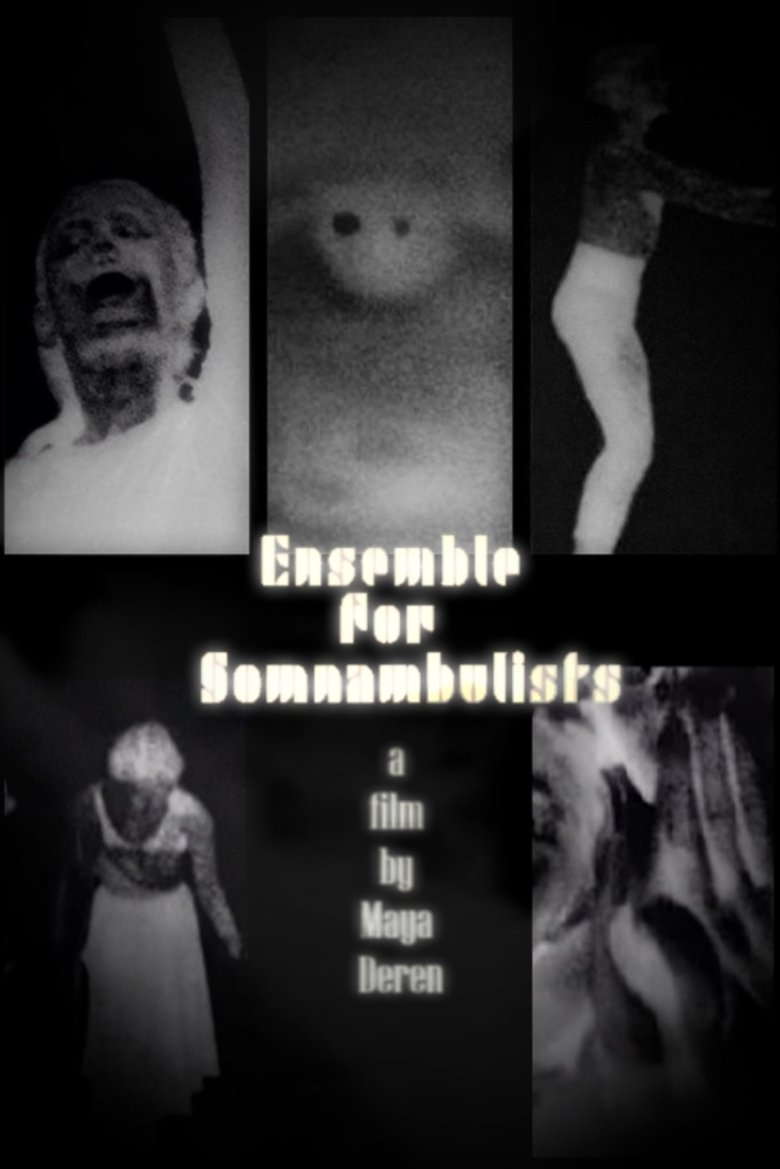
Ensemble for Somnambulists is an unfinished experimental silent film Maya Deren made while teaching a workshop at the Toronto Film Society.
Overall Score
Fair
Category Breakdown
LGBTQ+ Representation
The film avoids heteronormative tropes by abandoning traditional romantic arcs and domestic structures. While it lacks explicit queer identities, its dream-state logic creates a space outside conventional social expectations.
Gender Representation
Maya Deren centers the female subject as the primary agent of exploration. This subverts 1950s gender hierarchies by prioritizing female subjectivity and agency over submissive or domestic roles.
Racial & Ethnic Diversity
There is no evidence of racial or ethnic diversity within the cast or narrative. The film functions as a formalist study of movement rather than a social realist exploration.
Religious & Cultural Diversity
The work challenges Western pillars by prioritizing non-linear time and subjective morality. It moves toward secular, psychoanalytic interpretations of the human experience rather than structured religious frameworks.
Disability Representation
The film does not explicitly feature characters with disabilities. However, its focus on somnambulism explores neuro-atypical modes of perception through a formalist lens.
Strengths
Areas for Improvement
AI Analysis
Maya Deren’s experimental work succeeds in deconstructing the mid-20th-century social order by centering female agency and subjective experience. By rejecting traditional narrative structures, the film bypasses many of the era's restrictive gendered and heteronormative tropes. However, the film lacks demographic breadth. The absence of racial, ethnic, or explicit LGBTQ+ identities limits its social representation. It remains a formalist study of the subconscious rather than a diverse social portrait. Ultimately, the film's diversity is found in its structural rebellion. It offers a radical departure from Western teleological narratives, even if it does not address specific identity politics directly.
1958
1986
2010
1945
2016
![Movie poster for anyone lived in a pretty [how] town](https://image.tmdb.org/t/p/w500/m6BTukf1PIgUZEFJoKTO2bJii0r.jpg)
1967
1990
2003

1972
1950
1938
1981
No reviews yet. Be the first to share your thoughts on this movie!
Use the rating form above to leave a star rating and optional review.