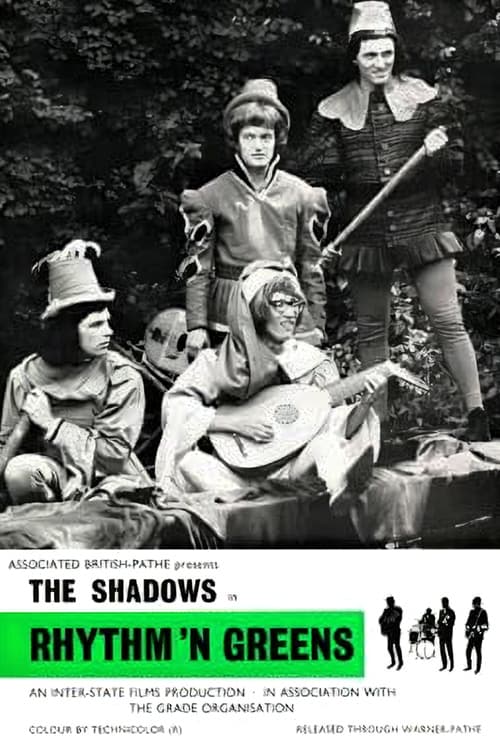
Rhythm 'n' Greens
1964
No user ratings available yet
Diversity score: 2.2 out of 10

1964
Director
Michael Snow
Runtime
34 minutes
Average Rating
No ratings yetSynopsis
A cutout of a woman's silhouette is displayed in many locations while a free jazz soundtrack is heard. The jazz musicians will pose later for the camera in a studio.
Overall Score
Minimal
Category Breakdown
LGBTQ+ Representation
As a non-narrative avant-garde work, the film lacks characters, dialogue, or interpersonal relationships. There are no depictions of LGBTQ+ identities or romantic arcs to analyze.
Gender Representation
A woman's silhouette appears as a recurring visual motif throughout the film. However, this cutout lacks agency or personality, serving as a formalist element rather than a character.
Racial & Ethnic Diversity
The film focuses on urban textures and architectural geometry. While the free jazz soundtrack provides a significant African American cultural layer, the visuals do not explicitly address racial identity.
Religious & Cultural Diversity
The work functions as a postmodern deconstruction of cinema. It challenges Western expectations of linear storytelling by prioritizing the mechanics of the zoom lens and image surfaces.
Disability Representation
The film contains no characters or depictions of individuals. Consequently, there is no representation of physical or neurodivergent identities.
Strengths
Areas for Improvement
AI Analysis
Michael Snow's structuralist masterpiece operates through formalist abstraction rather than social storytelling. Its primary objective is the exploration of cinematic mechanics, such as the pan and zoom, which precludes traditional character development. The low diversity scores are a byproduct of the film's non-narrative nature. Because the work lacks human subjects and interpersonal arcs, it cannot facilitate intersectional storytelling or represent specific social identities. Ultimately, the film's significance lies in its disruption of cinematic expectations. It replaces conventional representation with a rhythmic interrogation of the medium itself.
1964
1949
1942
1950

1966
1965
1962
1973
1969
1989
![Movie poster for anyone lived in a pretty [how] town](https://image.tmdb.org/t/p/w500/m6BTukf1PIgUZEFJoKTO2bJii0r.jpg)
1967
1940
No reviews yet. Be the first to share your thoughts on this movie!
Use the rating form above to leave a star rating and optional review.