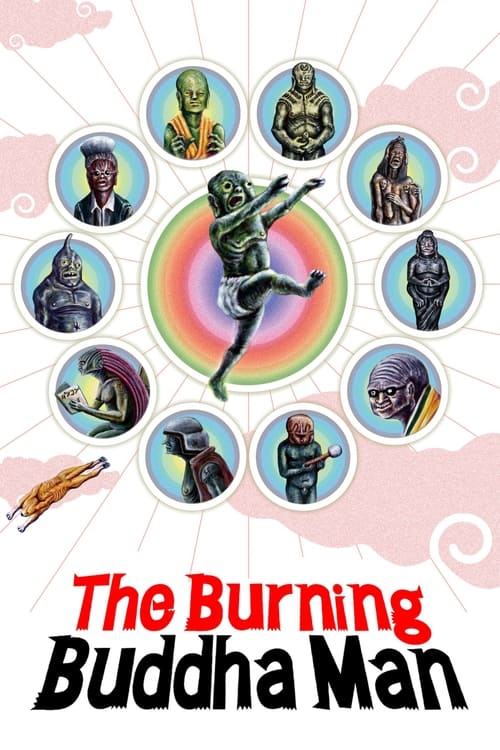
The Burning Buddha Man
2013
No user ratings available yet
Representation score: 4.7 out of 10

Representation Score
Good
1975
Director
Toshio Matsumoto
Runtime
12 minutes
Average Rating
No ratings yetNew Showbiz Analysis
Toshio Matsumoto’s *ĀTMAN* is a radical experiment in avant-garde cinema that prioritizes philosophical inquiry over traditional storytelling. It dismantles Western narrative structures and institutional hierarchies through a uniquely Japanese lens. The film successfully integrates Buddhist philosophy and Noh theater traditions, offering a critique of modern urbanization and materialism. However, its abstract nature limits its impact on specific identity representations. It focuses on the fragmentation of the self rather than socialized identities, lacking explicit depictions of LGBTQ+, gendered, or disability-focused narratives.
Category Breakdown
The film explores the concept of fragmented identity through surreal abstraction. Though it doesn't feature explicit LGBTQ+ storylines, it challenges traditional assumptions about identity.
By prioritizing the metaphysical soul over the physical body, the film de-emphasizes biological markers. It avoids traditional gender hierarchies in favor of a transient, non-binary essence.
The film incorporates Japanese aesthetics and Noh theater elements, providing a unique non-Western perspective in the global cinematic canon.
It frames existence through Buddhist ideas of reincarnation, critiquing Western materialism and offering a spiritual critique of modern urbanization.
The film uses sensory overload and altered states of consciousness to reflect neurodivergent experiences, though it does not provide detailed narratives focused on disability.
Present on Screen
Limited or Absent
Official Synopsis
ĀTMAN is a visual tour-de-force based on the idea of the subject at the centre of the circle created by camera positions (480 such positions). Shooting frame-by-frame the filmmaker set up an increasingly rapid circular motion. ĀTMAN is an early Buddhist deity often connected with destruction; the Japanese aspect is stressed by the devil mask of Hangan, from the Noh, and by using both Noh music and the general principle of acceleration often associated with Noh drama.
2013

1965

2007
1968
1981

2012
2005
1972
No reviews yet. Be the first to share your thoughts on this movie!
Use the rating form above to leave a star rating and optional review.