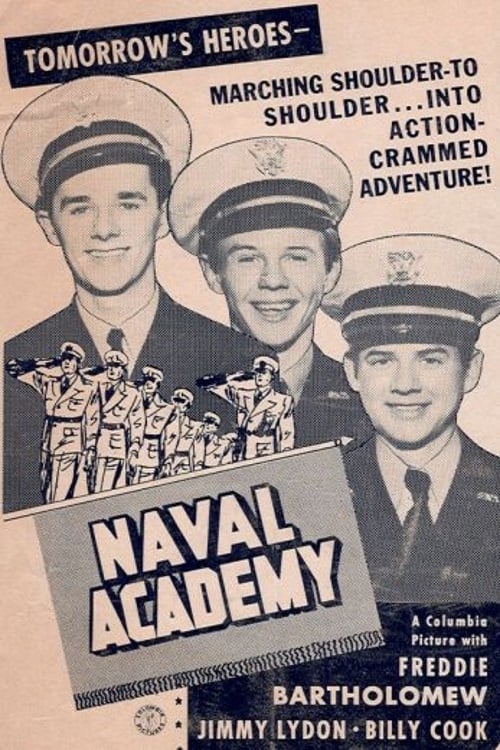
Naval Academy
1941
No user ratings available yet
Representation score: 0.3 out of 10
Representation Score
Minimal
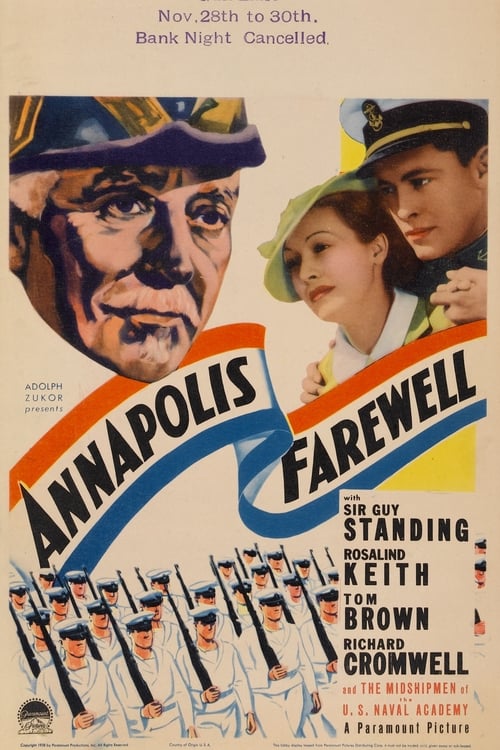
1935
ApprovedDirector
Alexander Hall
Runtime
75 minutes
Average Rating
No ratings yetNew Showbiz Analysis
Annapolis Farewell is a product of 1930s studio-era filmmaking, prioritizing conventional moral frameworks and established social hierarchies. The narrative is driven by a male protagonist's sentimental attachment to a decommissioned vessel, placing the focus squarely on patriarchal naval traditions. The film lacks complexity in representing multiple aspects of identity, offering no representation for LGBTQ+ individuals or people with disabilities. Its cultural lens is narrow, focusing on institutional nostalgia and the preservation of Western military heritage. Ultimately, the work reflects the era's standard of depicting military life through a homogeneous, traditionalist perspective, lacking any intentional disruption of social norms.
Category Breakdown
The film does not include any LGBTQ+ characters or narratives. It follows a traditional dramatic structure centered on naval nostalgia without addressing assumptions that everyone is straight or cisgender.
The story focuses on Commodore Fitzhugh and his struggle against modernization. Female characters appear to be relegated to secondary or domestic roles, reinforcing traditional hierarchies.
The narrative centers on an American naval officer's perspective. It likely features a homogeneous white cast, reflecting the era's standard of depicting military institutions through an Anglo-Saxon lens.
The film portrays a reverence for traditional military structures and the 'old navy.' It frames conflict through the preservation of heritage rather than a critique of systemic issues.
There is no evidence of characters with visible or invisible disabilities. Disability is not utilized as a narrative device within the film.
Present on Screen
Limited or Absent
Official Synopsis
Commodore Fitzhugh, an old retired naval officer, lives at the Annapolis Naval Academy and, unhappy with the "modern" navy, likes to talk about his days in the "old" navy, especially about his part in the Battle of Manila Bay under Adm. Dewey during the Spanish-American War, when he commanded the USS Congress. That ship, now decommissioned and docked in Annapolis harbor, is--unknown to Fitzhugh--about to be towed out to sea to be used for target practice. When Fitzhugh finds this out, he sets out to either save his beloved vessel or "go down with his ship".
1941

1942
1956
1945

1956
1960
1931
1955
No reviews yet. Be the first to share your thoughts on this movie!
Use the rating form above to leave a star rating and optional review.