Inn of Evil
1971
No user ratings available yet
Representation score: 6.2 out of 10
Representation Score
Fair
1978
Director
Yasuzō Masumura
Runtime
112 minutes
Average Rating
No ratings yetNew Showbiz Analysis
Yasuzō Masumura’s direction deconstructs traditional Japanese studio archetypes, emphasizing psychological complexity and individual desire. The film serves as a sharp critique of systemic corruption, focusing on the struggle against an oppressive economic hierarchy. While the film lacks modern markers like explicit LGBTQ+ identities or disability representation, it excels in its narrative structure. It prioritizes the deconstruction of authority, framing institutional power as a source of trauma rather than stability. Ultimately, the work succeeds as a study of individual autonomy against a crumbling social order, using the historical setting to explore shifting definitions of identity and class.
Category Breakdown
The film centers on a romantic relationship that challenges social and economic barriers. Though it doesn't explicitly identify the characters as LGBTQ+, it highlights unconventional emotional connections over strict societal norms.
The story examines how characters navigate power dynamics influenced by patriarchal and economic structures. It challenges traditional hierarchies by depicting the merchant authority figure as predatory and morally bankrupt.
Set in 1703 Japan, the casting reflects historical accuracy with an ethnically homogeneous cast. The film uses the merchant class to explore internal social stratification rather than a monolithic identity.
The film provides a nuanced critique of the rigid feudal and mercantile social contract. It portrays the protagonists' actions as a rejection of a corrupt, exploitative, and broken system.
There are no visible or invisible disabilities mentioned in the narrative or character descriptions.
Present on Screen
Limited or Absent
Official Synopsis
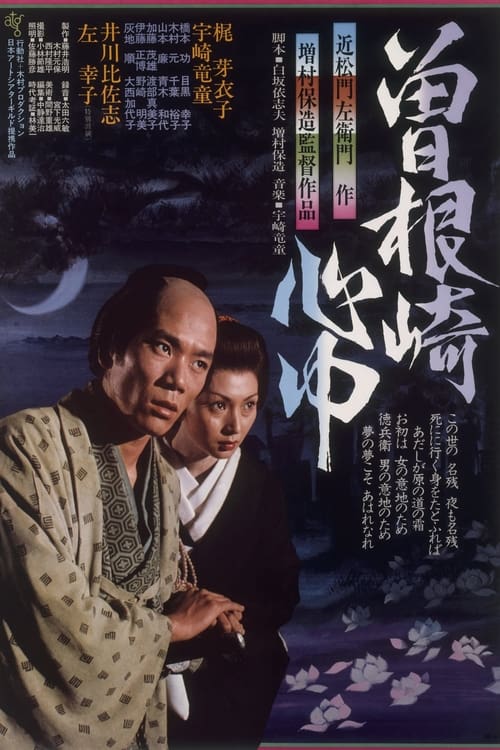
Suicide has long been used as a form of social protest in Japan. In this film, set in 1703, samurai culture is being transformed by the emergence of a new merchant class. Elements of the social contract are beginning to unravel, and some unscrupulous people took undue advantage of these changes before the social order was re-created. In this story, a rich merchant gives his clerk an I.O.U. instead of wages. When the impoverished clerk presents the paper to the merchant at the agreed upon time asking for payment, the man flies into a rage and pretends he never wrote it and claims the clerk is trying to defraud him. Then he sets his henchmen on the clerk to administer a beating.
1971

1960
1973
1957
1975
1967

1970
1971
No reviews yet. Be the first to share your thoughts on this movie!
Use the rating form above to leave a star rating and optional review.