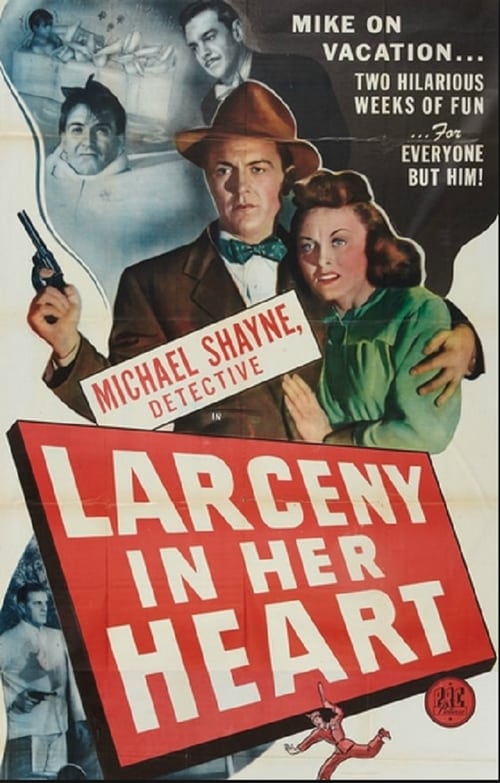
Larceny in Her Heart
1946
No user ratings available yet
Representation score: 0.2 out of 10

Representation Score
Minimal
1946
NRDirector
Sam Newfield
Runtime
68 minutes
Average Rating
No ratings yetNew Showbiz Analysis
Blonde for a Day is a conventional B-movie mystery that reinforces the social hierarchies of 1946. The narrative structure prioritizes male protagonists, with the investigative momentum driven entirely by the reporter and the private detective. The film lacks meaningful representation across most categories, adhering to the era's standard casting and storytelling clichés. It functions as a genre piece that maintains established social orders rather than questioning them. Ultimately, the film offers little in the way of diverse perspectives, serving instead as a product of its specific historical and cinematic moment.
Category Breakdown
The film follows traditional 1940s noir frameworks, focusing on straight relationships. There are no LGBTQ+ characters or narratives that challenge social norms.
Male characters drive the plot through the roles of the reporter and detective. Female characters are secondary to the male-led investigation.
The narrative lacks characters of color with significant roles. It adheres to the homogeneous casting norms typical of mid-century American crime cinema.
The story operates within standard Western crime clichés, focusing on institutional friction rather than providing a systemic critique of social or cultural orders.
There are no characters with visible or invisible disabilities within the film's context.
Present on Screen
Limited or Absent
Official Synopsis
Newspaper reporter Tim Rourke keeps writing articles that attack the police department for its failure to solve a chain of murders, which nearly leads to the reporter's death. He calls in private detective Michael Shayne, who turns up a blonde and a blackmailer.
1946
1946
1937

1948
1947

1948

1948

1953
No reviews yet. Be the first to share your thoughts on this movie!
Use the rating form above to leave a star rating and optional review.