Find another title
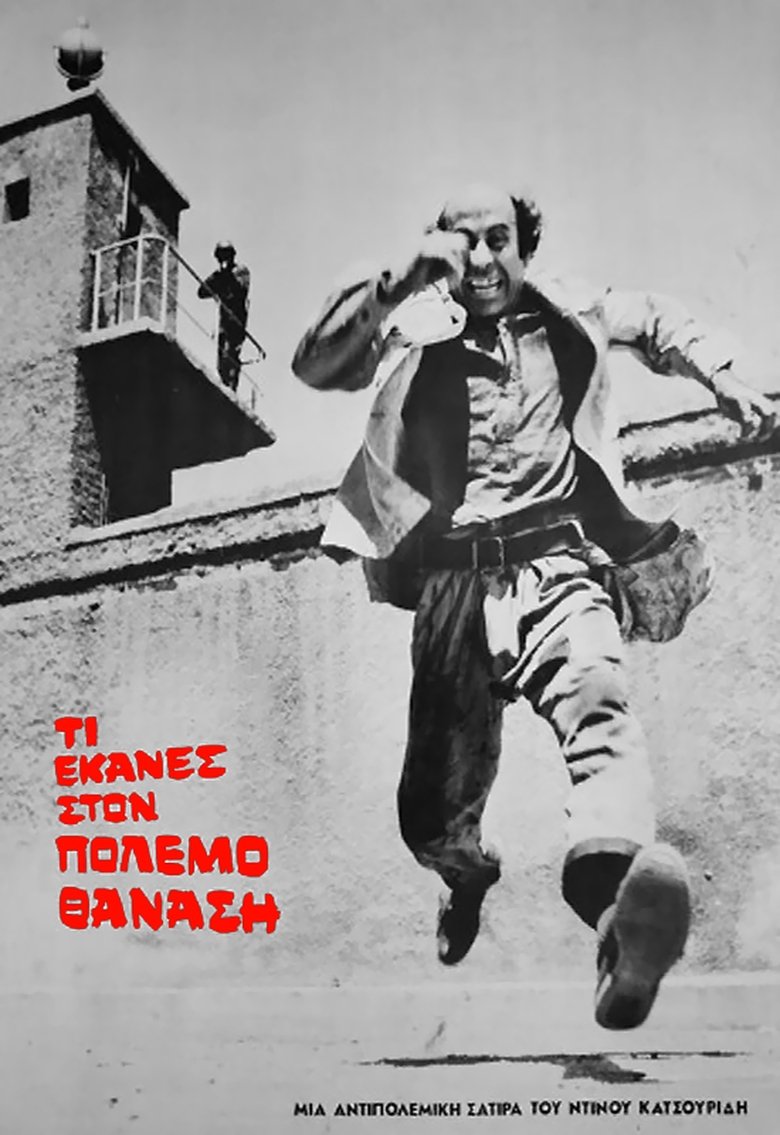
What Did You Do in the War, Thanassi?
1971
Director
Dinos Katsouridis
Runtime
85 minutes
Average Rating
No ratings yetSynopsis
A wild tale of mistaken identity set during the Nazi occupation of Greece and starring the great Thanasis Vengos. Thanasis is called upon, during the Occupation, to testify at the trial of a tavern owner accused of serving cat meat to his customers. He too is accused of perjury and imprisoned with some resistance fighters. The resistance fighters escape, but Thanasis remains in his cell. He is accused of being Ivan, the notorious ringleader of certain revolutionaries.
Where to Watch
Diversity & Representation
Overall Score
Limited
Category Breakdown
LGBTQ+ Representation
The film focuses on the masculine experience of wartime survival and psychological trauma. There is no evidence of queer narratives or non-cisnormative identities present.
Gender Representation
The narrative centers on male-dominated spheres of political upheaval and resistance. It lacks significant evidence of female agency or the subversion of gender hierarchies.
Racial & Ethnic Diversity
The cast reflects the historical homogeneity of 1940s Greece during the Nazi occupation. While it critiques occupying forces, it does not utilize diverse casting to disrupt demographic realities.
Religious & Cultural Diversity
The film excels by deconstructing institutional authority and challenging the infallibility of legal systems. It uses moral relativism to explore the complex gray areas of survival.
Disability Representation
There is no evidence of characters with physical or neurodivergent disabilities. The focus remains on the psychological repercussions of war rather than disability as a narrative element.
Strengths
- Sophisticated deconstruction of traditional institutional authority and legal infallibility.
- Nuanced exploration of moral relativism and the complexities of survival during wartime.
- Effective critique of nationalistic myth-making through a postmodern lens.
Areas for Improvement
- Lack of female agency or significant representation of women in the narrative.
- Absence of LGBTQ+ narratives or non-cisnormative gender identities.
- Minimal inclusion of characters with physical or neurodivergent disabilities.
AI Analysis
The film is a period piece that prioritizes historical accuracy and the psychological toll of war over demographic variety. It operates within a traditional mid-century framework, focusing on the friction between the individual and the state during the Nazi occupation of Greece. While the film lacks representation for LGBTQ+ individuals, women, and people with disabilities, it offers a sophisticated critique of social and legal institutions. It avoids simplistic heroism in favor of a nuanced look at how conflict erodes moral certainties. Ultimately, the work is culturally rich in its thematic depth but remains demographically narrow, reflecting the specific ethnic and gendered realities of its historical setting.
Rate this Movie
Reviews
No reviews yet. Be the first to share your thoughts on this movie!
Use the rating form above to leave a star rating and optional review.