Edgar Runs Again
1940
No user ratings available yet
Representation score: 3.0 out of 10
Representation Score
Minimal
1954
ApprovedDirector
Paul J. Smith
Runtime
6 minutes
Average Rating
No ratings yetNew Showbiz Analysis
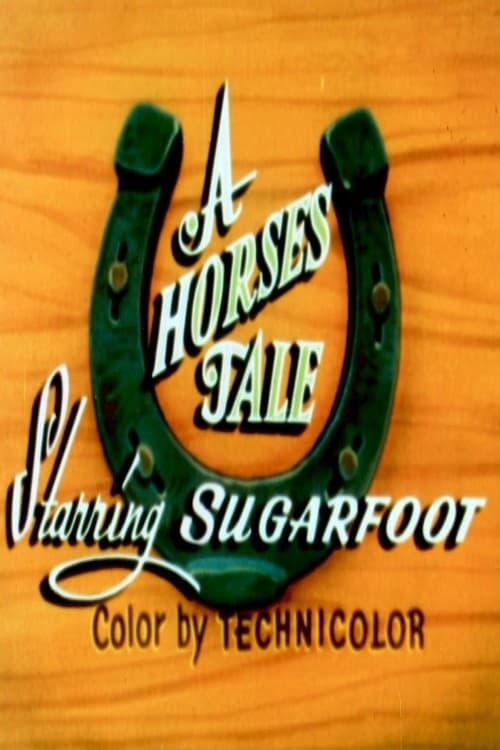
A Horse's Tale functions as a conventional fable centered on labor and recognition. The narrative follows a restorative arc where a disruption of order is resolved by reintegrating the protagonist into the existing hierarchy. The film adheres to the established moral frameworks of the mid-20th century, focusing on slapstick and conventional archetypes. It does not challenge systemic power dynamics, instead using them as the framework for its moral resolution. Ultimately, the work reflects the homogeneous social structures and traditional values of its era, prioritizing the restoration of the status quo over social critique.
Category Breakdown
The film operates within a framework that assumes everyone is straight and cisgender, typical of 1950s animation. There is no evidence of characters with diverse gender identities or same-sex relationships.
The narrative lacks significant female character's ability to drive the story. It centers on a male-dominated hierarchy involving the farmer and the star horse, offering little subversion of traditional gender roles.
The setting appears to be a traditional agrarian environment with no indication of a diverse cast. The narrative centers on a homogeneous social structure reflecting era-standard production norms.
The story reinforces traditional Western values regarding property and labor. The resolution emphasizes redemption through capital accumulation and adherence to the farmer's authority.
No specific characters with visible or invisible disabilities are identified in the narrative.
Present on Screen
Limited or Absent
Official Synopsis
Sugarfoot, the faithful old plow-horse, fearing his days and place on the farm are numbered since his master had purchased a tractor, destroys it. The farmer is outraged and banishes Sugarfoot from the farm. Sugarfoot is determined to make the money needed to buy his master a new tractor, and he becomes a movie-double for a screen Wonder Horse of the Movies, and makes enough money to buy a new tractor. The farmer forgives him and, as a reward, takes him to the movies, where Sugarfoot sees the star-horse getting all the credit for all of Sugarfoot's stunt-doubling.
1940
1954

1933
1939
1944
1944
1937
1975
No reviews yet. Be the first to share your thoughts on this movie!
Use the rating form above to leave a star rating and optional review.