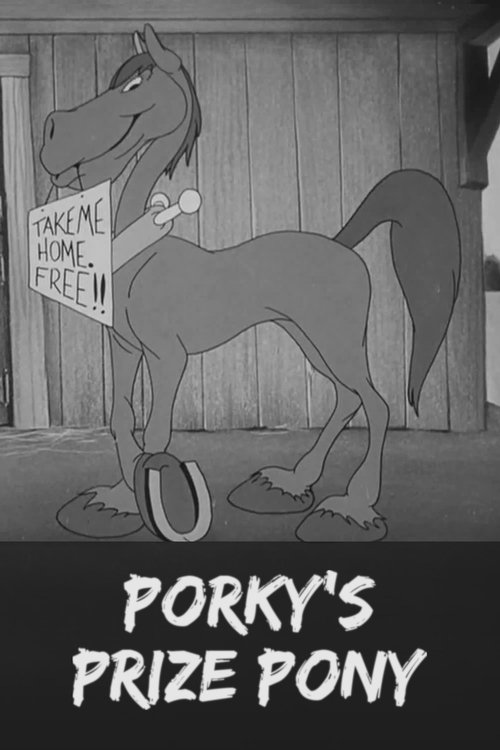
Porky's Prize Pony
1941
No user ratings available yet
Representation score: 0.1 out of 10
No Poster Available
Representation Score
Minimal
1944
ApprovedDirector
Howard Swift
Runtime
7 minutes
Average Rating
No ratings yetNew Showbiz Analysis
Giddy-Yapping is a character-driven fable that centers on the immediate struggle of a starving horse seeking a lunch break. The narrative focuses on a specific labor dispute between a horse and a window-washer, emphasizing a straightforward plot over social commentary. Since the film lacks diverse representation, it does not engage with broader demographic or systemic critiques. Characters are defined by their species and occupation rather than social identities. Ultimately, the work adheres to a traditional structure common in 1944 animation, offering limited progressive representation or subversion of established social hierarchies.
Category Breakdown
The film does not include any references to LGBTQ+ identities or themes. There are no depictions of gender non-conformity or same-sex relationships.
The story revolves around a labor dispute between a horse and a human. It does not show any gender-based power dynamics or specific gender roles.
The racial or ethnic backgrounds of the characters are not mentioned. The film does not intentionally represent diverse races or challenge Anglo-centric norms.
The film explores themes of labor and class struggle through a working-class setting. It focuses on an individual's struggle for survival rather than a broader critique of societal systems.
There are no characters with visible or invisible disabilities in the film. The story does not utilize neurodivergence or physical impairments as narrative elements.
Present on Screen
Limited or Absent
Official Synopsis
A starving horse tries to convince Puzzlewitz the window-washer to give him a lunch break. The horse washes windows, too!
1941
1945
1942
1934
1942
1948
1940
1939
No reviews yet. Be the first to share your thoughts on this movie!
Use the rating form above to leave a star rating and optional review.