Our Wife
1931
No user ratings available yet
Representation score: 1.1 out of 10
Representation Score
Minimal
1931
NRDirector
James W. Horne
Runtime
28 minutes
Average Rating
No ratings yetNew Showbiz Analysis
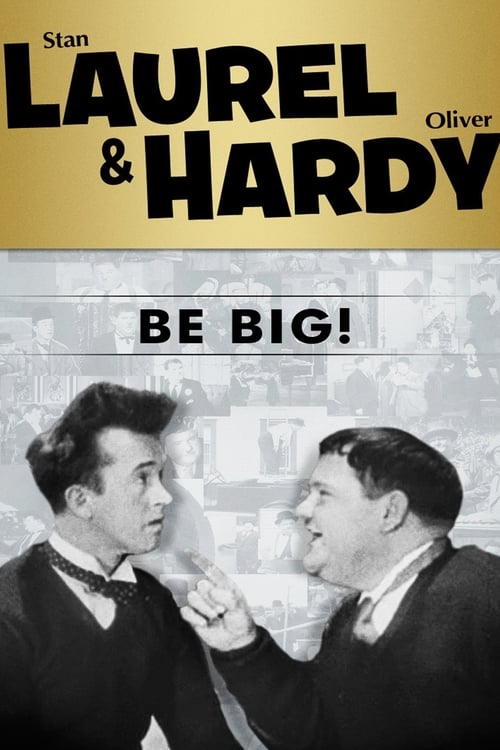
Be Big! is a traditional slapstick comedy that relies on established social hierarchies. The narrative structure prioritizes male-centric social rituals and the avoidance of domestic responsibilities, reinforcing the period's standard gendered expectations. While the film succeeds as a comedic piece, it lacks any intention to challenge power dynamics or represent diverse identities. The focus remains on the tension between marital duties and male social rituals, reflecting the homogeneous demographic norms of early 1930s American cinema.
Category Breakdown
The story revolves around husbands and wives, focusing on heterosexual relationships without addressing non-cisgender identities or critiques of traditional social structures.
The film emphasizes conventional gender roles, depicting women as domestic figures while men seek to avoid their marital responsibilities through male-focused social activities.
The narrative seems to follow the demographic norms of early 1930s American cinema, focusing on a homogeneous group within a localized American context.
Humor is derived from masculine leisure activities and fraternal lodge traditions, supporting the status quo of the nuclear family and Western social institutions.
The film does not include any characters with visible or invisible disabilities.
Present on Screen
Limited or Absent
Official Synopsis
Stan and Ollie are on their way to Atlantic City with their wives, when Ollie gets a phone call from a lodge buddy telling him that a stag party is taking place that night in their honor. Ollie pretends to be sick and sends the wives on ahead, promising that he and Stan will meet them in the morning. The pair dress in their lodge gear, but their wives return having missed their train. With no obvious escape route, Stan and Ollie take to a bed in fear and in response to Stan's plea of "What'll I do?", Ollie replies "Be big!".
1931
1933
1931
1926
1931
1932
1930
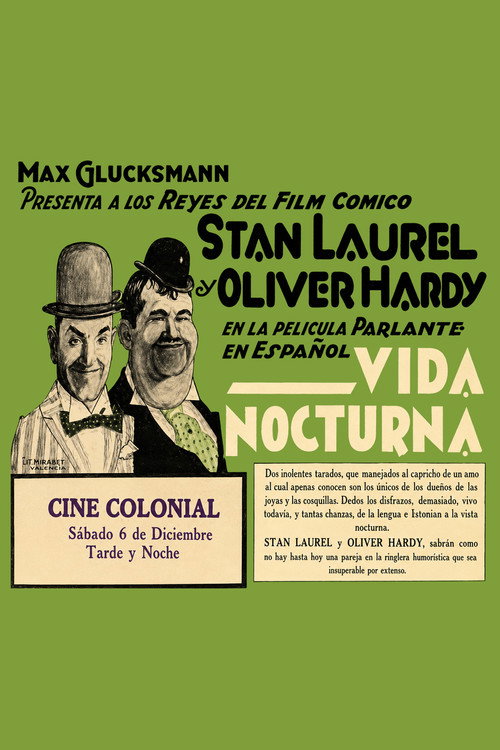
1930
No reviews yet. Be the first to share your thoughts on this movie!
Use the rating form above to leave a star rating and optional review.