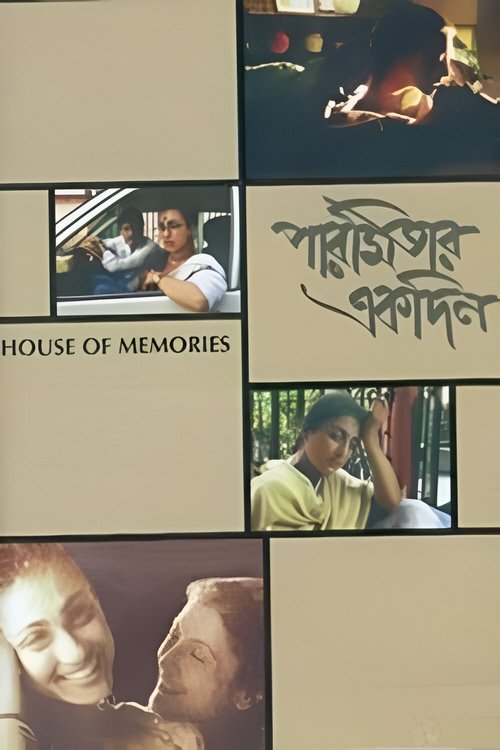
House of Memories
2000
No user ratings available yet
Representation score: 6.2 out of 10

Representation Score
Good
2019
Not RatedDirector
Aparna Sen
Runtime
133 minutes
Average Rating
No ratings yetNew Showbiz Analysis
Aparna Sen’s direction brings a sophisticated exploration of gendered ability to act to this contemporary retelling of Tagore's classic. The film succeeds in challenging power hierarchies by centering the intellectual and emotional autonomy of its female lead, moving beyond standard romantic drama clichés. While the film excels in its nuanced portrayal of mature women and regional Bengali identity, it lacks overt multi-layered markers. There is little visibility regarding LGBTQ+ identities or diverse racial backgrounds, keeping the narrative within a more traditional social framework. Ultimately, the work functions as a character-driven study of loneliness and unconventional relationships. It prioritizes subjective morality and the deconstruction of social norms over broad demographic representation.
Category Breakdown
The film explores unconventional romantic connections and the complexities of companionship. However, there is no explicit evidence of LGBTQ+ identities or non-assuming gender matches what was assigned at birth identities within the primary character arcs.
The narrative centers the ability to act of a mature woman, disrupting traditional hierarchies. By placing a middle-aged female protagonist at the heart of the conflict, it challenges stereotypes that sideline older women.
As a Bengali production set in Kolkata, the film provides authentic representation of a specific regional identity. It operates within a relatively homogeneous ethnic framework typical of regional realist cinema.
The film deconstructs traditional social expectations by adapting Tagore’s work into a contemporary setting. It prioritizes personal truth and individual desire over rigid, singular moralities and established social institutions.
There is no discernible focus on physical or neurodivergent disabilities. No specific characters are identified as having disabilities within the narrative.
Present on Screen
Limited or Absent
Official Synopsis
Ghawre Bairey Aaj is inspired by Rabindranath Tagore's novel 'Ghawre Bairey' (Home and the World) and is a contemporary retelling of love triangle involving Tagore's characters Nikhilesh, Sandip and Bimala.
2000

1964

1981

1951

2003

2005

2018

2018
No reviews yet. Be the first to share your thoughts on this movie!
Use the rating form above to leave a star rating and optional review.