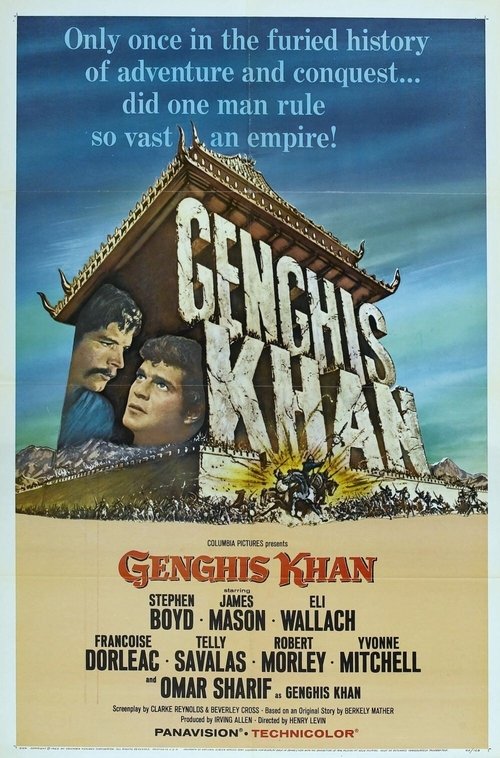
Genghis Khan
1965
No user ratings available yet
Representation score: 0.5 out of 10
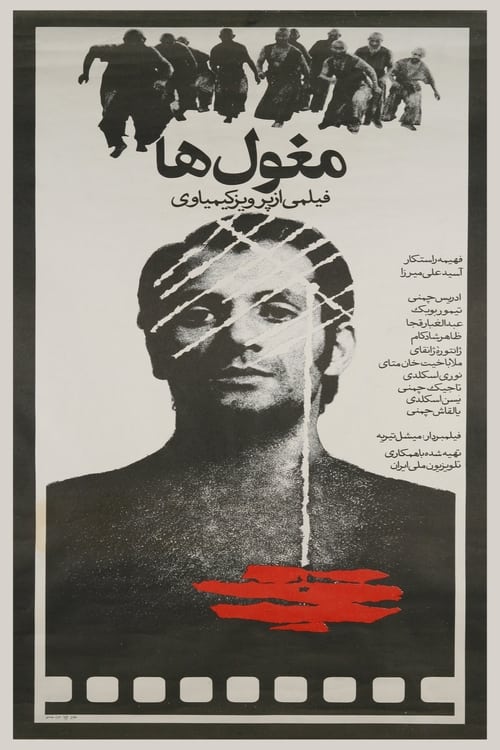
Representation Score
Fair
1973
Director
Parviz Kimiavi
Runtime
92 minutes
Average Rating
No ratings yetNew Showbiz Analysis
The film stands out by integrating ethnic diversity and presenting the female lead as an intellectual authority. By featuring Turkmen tribespeople and avoiding common clichés, it broadens the narrative scope beyond urban settings. However, the film does not explicitly represent LGBTQ+ identities or disabilities. The narrative remains centered around a marital dynamic and historical fantasy. Overall, the work is a sophisticated piece that uses historical trauma and academic inquiry to challenge objective reality, offering a complex view of identity.
Category Breakdown
The film focuses on a marital relationship between the director and his wife. There are no explicit depictions of LGBTQ+ identities or non-straight relationships.
The wife is portrayed as an intellectual authority rather than a passive figure. She pursues a Ph.D. dissertation, providing a scholarly perspective that contrasts with the protagonist's creative goals.
The film includes Turkmen tribespeople and the Zahedan province, moving the narrative away from a monolithic, urban-centric view of Iranian identity.
The story blends personal fantasy with the historical Mongol invasion through clever juxtapositions. This approach offers a nuanced, multi-layered perspective instead of a singular nationalist narrative.
The available information does not mention any depictions of physical or neurodivergent disabilities.
Present on Screen
Limited or Absent
Official Synopsis
A director of a television series on the history of cinema, who has been grappling with the screenplay of his first feature film, receives an assignment to oversee the installation of a television relay station in a remote region of Zahedan province. He has already hired Turkmen tribespeople for his film and selected his filming location. Meanwhile his wife, who is working on her Ph.D. dissertation about the Mongol invasion of Iran, attempts to dissuade him from accepting the assignment. One night, while working on his history of the cinema series, the director fantasizes a diegetic world that consists of clever juxtapositions of his different worlds: the history of cinema, the history of the mongol invasion, his own film idea and his imminent assignment to the desert.
1965
1954
1991

1944
1916
1991
1988

1976
No reviews yet. Be the first to share your thoughts on this movie!
Use the rating form above to leave a star rating and optional review.