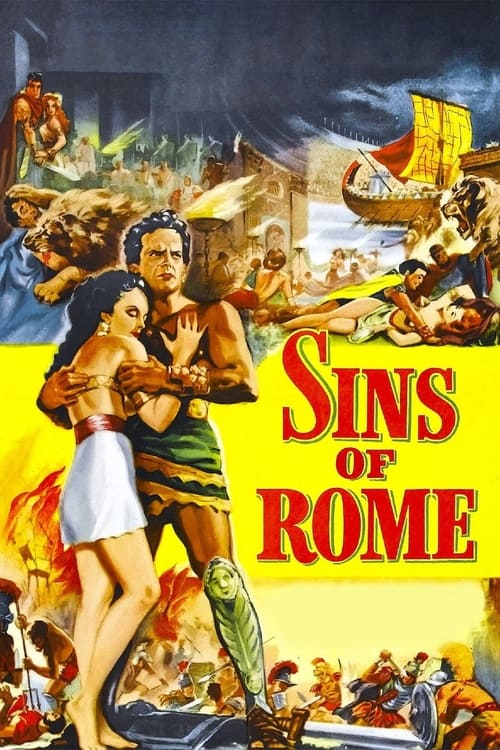
Sins of Rome
1953
No user ratings available yet
Representation score: 2.4 out of 10

Representation Score
Minimal
1960
ApprovedDirector
Nunzio Malasomma
Runtime
102 minutes
Average Rating
No ratings yetNew Showbiz Analysis
The Revolt of the Slaves is a classic example of the mid-century Italian peplum genre, emphasizing epic scale and archetypal storytelling over modern multi-layered depth. While it lacks representation for LGBTQ+ identities and disability, the film explores themes of anti-establishment rebellion and class struggle, offering a layer of socio-political complexity.
Category Breakdown
The film follows traditional heterosexual norms, with no representation of LGBTQ+ identities or same-sex relationships.
The female lead plays a significant role in driving the plot, but her actions mainly support the male protagonist. Masculinity is depicted through conventional combat and leadership roles.
The film features a predominantly white European cast, maintaining the visual standards of the Italian peplum era without diverse ethnic representation.
The narrative critiques an oppressive Roman aristocracy and portrays a slave rebellion as a movement for liberation, providing a critique of centralized power.
The film does not address neurodivergence or physical disabilities. Characters are defined by their physical abilities required by the adventure genre.
Present on Screen
Limited or Absent
Official Synopsis
A rich man's daughter (Rhonda Fleming) sides with a Christian rebel during the fall of the Roman Empire.
1953

1951
1964

1965

1961
1964

1962
1959
No reviews yet. Be the first to share your thoughts on this movie!
Use the rating form above to leave a star rating and optional review.