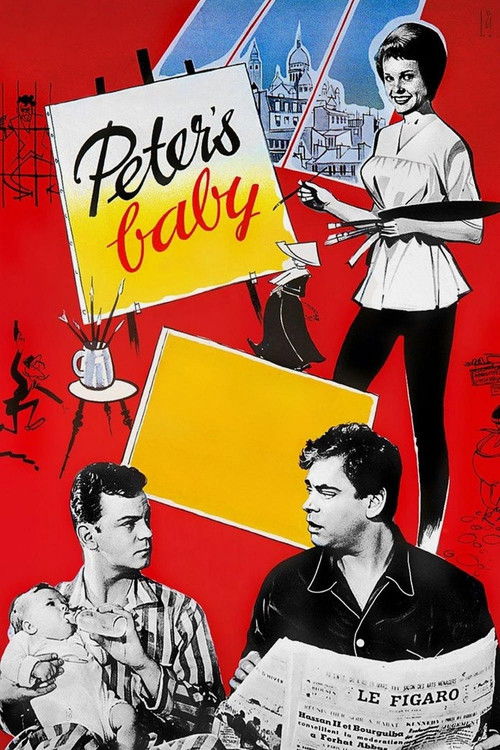
Peter's baby
1961
No user ratings available yet
Diversity score: 3.0 out of 10

1963
Director
Annelise Reenberg
Runtime
104 minutes
Average Rating
No ratings yetSynopsis
Frøken Nitouche is a 1963 Danish comedy film directed by Annelise Reenberg and starring Lone Hertz and Dirch Passer. It is based on the operetta Mam'zelle Nitouche.
Overall Score
Limited
Category Breakdown
LGBTQ+ Representation
The film lacks any documented presence of non-heteronormative identities. Romantic arcs center on traditional pairings without queer subtext or non-cisnormative gender expressions.
Gender Representation
Nitouche demonstrates agency by pursuing a professional theater career, disrupting the passive female lead trope. However, the plot remains heavily reliant on traditional romantic fulfillment.
Racial & Ethnic Diversity
The cast is homogeneous, reflecting the specific cultural context of Danish musical theater. There is no evidence of racial blending or non-white characters.
Religious & Cultural Diversity
The narrative reinforces traditional institutions like the convent and bourgeois social order. It prioritizes conventional morality and romantic stability over social critique.
Disability Representation
There are no visible or invisible disabilities portrayed with agency. Characters with disabilities are not a component of the narrative arc.
Strengths
Areas for Improvement
AI Analysis
Frøken Nitouche is a period-specific musical comedy that prioritizes genre conventions over social commentary. While the protagonist's pursuit of a professional identity provides a modest degree of female agency, the film's structure is conservative. It reinforces traditional social, racial, and moral hierarchies rather than subverting them. The film functions as a celebration of cultural heritage and the aesthetic charm of the operetta. It adheres to the established social orders of its era, focusing on escapism rather than intentional social deconstruction.
1961
1994

1974

2012
1955
1960
1968
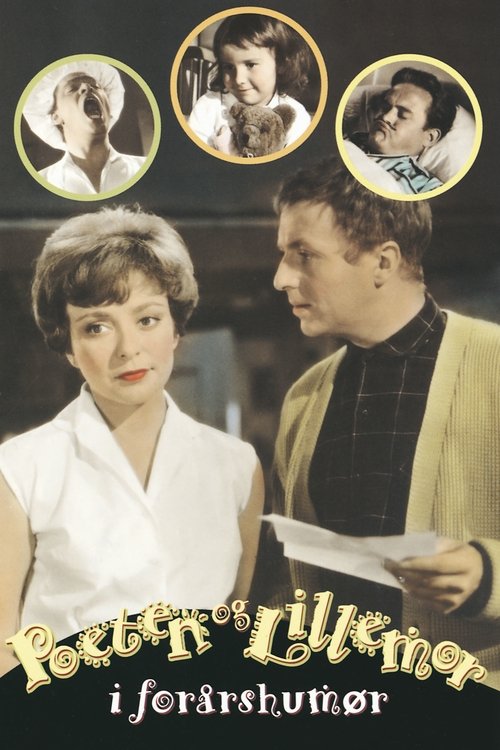
1961
1961
1960

1953

1963
No reviews yet. Be the first to share your thoughts on this movie!
Use the rating form above to leave a star rating and optional review.