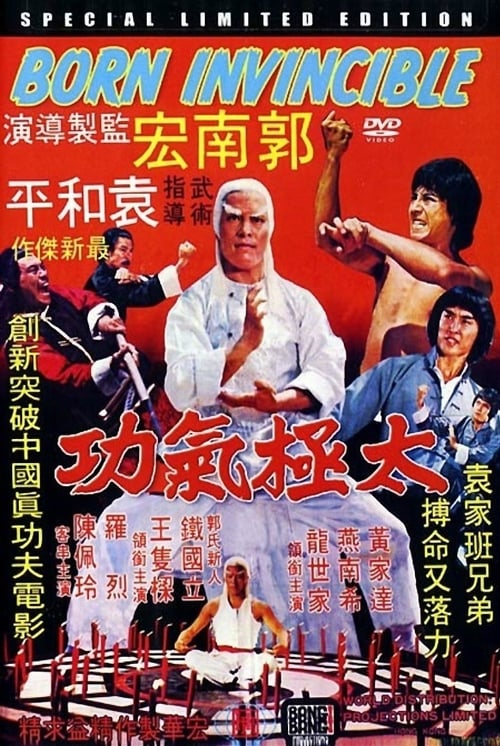
Born Invincible
1978
No user ratings available yet
Diversity score: 3.9 out of 10

1977
NRDirector
Tyrone Hsu
Runtime
91 minutes
Average Rating
No ratings yetSynopsis
Sensing a rebellion is brewing in the small town of Lung Wei Village, the Manchu warlords command the village magistrate to hunt down the rebels. He hires four warriors, all of them expert martial artists, to stop the rebellion. The stakes are high: If they don't succeed, the rebels may change the course of Chinese history.
Overall Score
Limited
Category Breakdown
LGBTQ+ Representation
The film lacks any evidence of non-cisnormative identities or same-sex intimacy. It appears to follow traditional martial arts genre conventions of the era.
Gender Representation
The plot centers on a masculine hierarchy of warlords, a magistrate, and four male warriors. The narrative focus remains on military command and combat prowess.
Racial & Ethnic Diversity
Set in a Manchu era context, the film provides a non-Western perspective. However, the cast and setting remain ethnically homogeneous within the story's internal logic.
Religious & Cultural Diversity
The story focuses on a high-stakes historical rebellion rather than systemic critique. It leans toward traditionalist epic storytelling without subverting social structures.
Disability Representation
There is no mention of characters with visible or invisible disabilities. The narrative does not include neurodivergent representation.
Strengths
Areas for Improvement
AI Analysis
Lung Wei Village is a traditional 1977 action piece that prioritizes historical conflict and martial arts tropes. The narrative architecture is built around established power hierarchies and conventional masculine archetypes common to mid-20th-century genre cinema. While the film offers a culturally specific East Asian perspective, it lacks intentional intersectional depth. The focus remains on a geopolitical struggle between warlords and rebels, leaving little room for progressive subversion or diverse character identities.
1978

1971
1993
1982
1962

2020
1976
1977
1977
1980

1976
1971
No reviews yet. Be the first to share your thoughts on this movie!
Use the rating form above to leave a star rating and optional review.