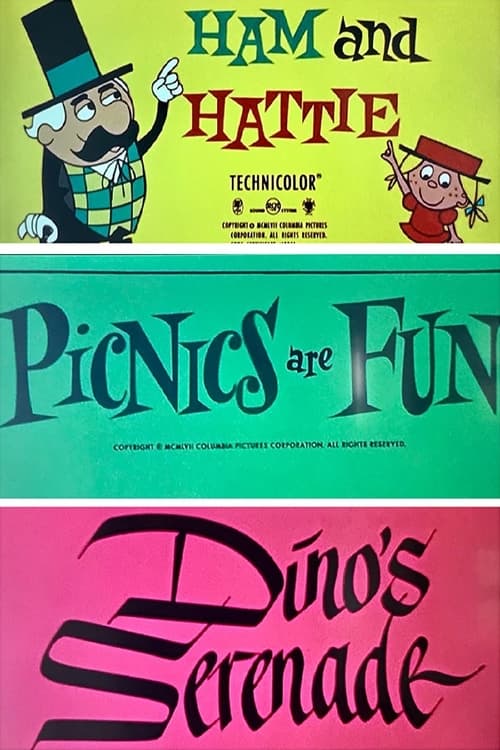
Picnics Are Fun and Dino's Serenade
1959
No user ratings available yet
Representation score: 0.4 out of 10

Representation Score
Minimal
1958
PassedDirector
Fred Crippen, Lew Keller
Runtime
7 minutes
Average Rating
No ratings yetNew Showbiz Analysis
This UPA split-reel short focuses more on showcasing modernist animation techniques rather than diverse storytelling. While it features a female protagonist named Hattie, the narrative structure adheres closely to mid-century social norms. The segments emphasize social cohesion and the reinforcement of authority. Whether through a policeman restoring harmony or a band performing for a dignitary, the film highlights established hierarchies over subversive or inclusive themes. Ultimately, the absence of racial, disability, or LGBTQ+ representation mirrors the conventional, homogeneous landscape of late-1950s animation.
Category Breakdown
The film does not include any characters with LGBTQ+ identities or those who do not identify with their assigned gender at birth. It relies on traditional mid-century archetypes without any queer undertones.
Hattie provides a rare moment where a woman plays a significant role in driving the story. However, the resolution depends on a male policeman to bring order and stability.
The animation lacks diverse casting or interactions among characters of different races. The characters seem to follow uniform archetypes typical of 1950s American media.
The narrative emphasizes traditional Western institutions and social hierarchies. Status is often linked to one’s position in society, such as greeting a distinguished dignitary.
There is no depiction of visible or invisible disabilities. No characters with neurodevelopmental differences or disability-related narrative elements are present.
Present on Screen
Limited or Absent
Official Synopsis
The second of UPA's split-reel cartoons in which there were two unrelated segments---one with Hattie and one with Ham---of 3.5 minutes each. The first one---Sailing" has young Hattie sailing her boat in a fountain and is quite dismayed when a frog sinks it. She brightens up when a friendly policeman restores it for her. The second unrelated segment---"The Village Band"--- features Hamilton Ham in the story of a village band that goes unappreciated by the populace until it is needed to greet a distinguished dignitary.
1959
1957
1935
1929
1946
1952

1922

1928
No reviews yet. Be the first to share your thoughts on this movie!
Use the rating form above to leave a star rating and optional review.