
Sailing and Village Band
1958
No user ratings available yet
Representation score: 1.0 out of 10
Representation Score
Minimal
1959
PassedDirector
Fred Crippen, Lew Keller
Runtime
7 minutes
Average Rating
No ratings yetNew Showbiz Analysis
This 1959 animated short adheres strictly to the social and narrative conventions of mid-century Western animation. The two segments rely on established archetypes, such as the romantic musician and the domestic female lead, reinforcing traditional social hierarchies without challenging them. The film lacks complexity in representing multiple aspects of identity and offers a homogeneous view of character backgrounds. There is a notable absence of racial, cultural, or disability-related representation, making it a typical example of period-typical escapist media.
Category Breakdown
The film does not depict any non-straight relationships. The romantic storyline follows traditional patterns involving a musician and a love interest.
The characters adhere to mid-century stereotypes. Hattie engages in domestic activities, while the second segment follows a conventional male-driven melodrama structure.
The animation reflects the era's typical lack of diversity. There are no characters of color or multicultural interactions.
The content serves as escapist entertainment using Western storytelling styles. It does not engage with or critique religious or social institutions.
There is no representation of visible or invisible disabilities. No neurodivergent characters are featured in the narrative.
Present on Screen
Limited or Absent
Official Synopsis
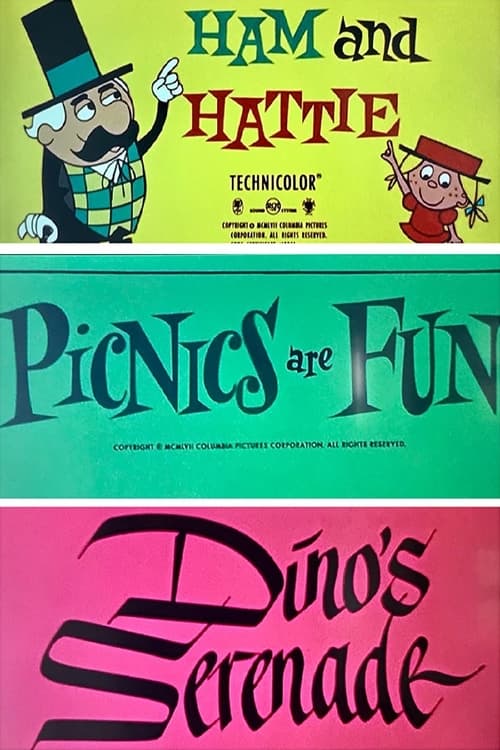
A "Ham & Hattie" cartoon which means two different cartoons splitting the seven minutes of running time. "Picnics are Fun" finds Hattie taking her two dolls for a picnic in the 'Country"---the roof of her apartment building where the trees, flowers and greenery grow only in her fertile imagination; the second offering, "Dino's Serenade", has Ham & His World Players doing a sketch about a strolling musician, the girl he loves and the villain who steals her away.
1958
1952
1955
1939
1932

1935
1964
1946
No reviews yet. Be the first to share your thoughts on this movie!
Use the rating form above to leave a star rating and optional review.