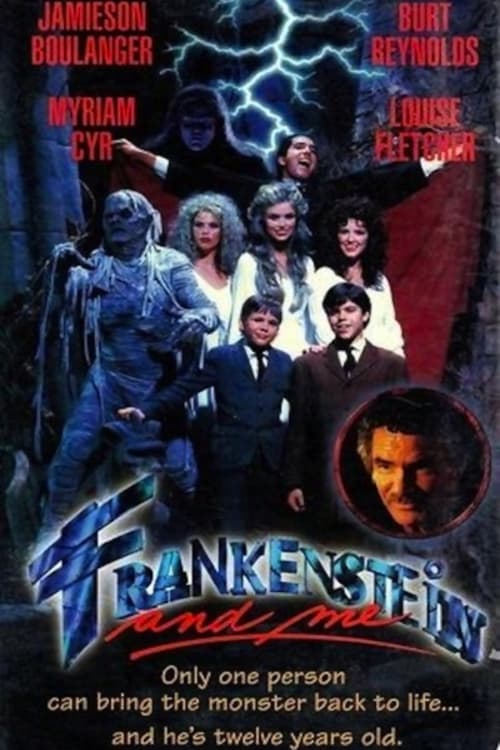
Frankenstein and Me
1996
No user ratings available yet
Diversity score: 4.3 out of 10

1974
PGDirector
William Castle
Runtime
93 minutes
Average Rating
No ratings yetSynopsis
Malcolm Shanks is a sad and lonely man, deaf, mute and living with his cruel sister and her husband, who delight in making him miserable. His only pleasure, it seems, is in making and controlling puppets. Thanks to his skill, he is offered a job as a lab assistant to Dr. Walker, who is working on ways to re-animate dead bodies by inserting electrodes at key nerve points and manipulating the bodies as if they were on strings. When the professor suddenly dies one night, Shanks gets the idea to apply their experimental results to a human body, and then to start exacting some revenge.
Overall Score
Limited
Category Breakdown
LGBTQ+ Representation
The film lacks any evidence of LGBTQ+ characters or narratives. It focuses on a singular protagonist's psychological struggle within a traditional domestic setting.
Gender Representation
Female characters are framed through an antagonistic lens, specifically the cruel sister. This relies on the trope of the malicious female relative rather than presenting nuanced agency.
Racial & Ethnic Diversity
The narrative appears to follow conventional, homogeneous character distributions typical of 1970s horror. There is no indication of a diverse cast or non-Anglo-Saxon characters.
Religious & Cultural Diversity
The story explores isolation and family breakdown through psychological horror. It centers on personal revenge rather than a broader systemic or philosophical critique of Western institutions.
Disability Representation
Malcolm Shanks is depicted as deaf and mute, gaining agency through his puppetry skills. However, his disability also serves as a catalyst for horror and pathos.
Strengths
Areas for Improvement
AI Analysis
Shanks is a traditional 1970s psychological horror film that prioritizes individual grievance over social complexity. While it offers a central character with a disability who drives the plot, the work remains rooted in the demographic norms of its era. The film's representation is largely one-dimensional. It utilizes established tropes, such as the malicious female relative, and lacks the intersectional depth or diverse casting necessary to challenge systemic social structures. Ultimately, the film functions as a character study of isolation and revenge. It provides a rare moment of agency for a disabled protagonist but fails to provide broader cultural or identity-based diversity.
1996
1982
1920
1972
2000
No reviews yet. Be the first to share your thoughts on this movie!
Use the rating form above to leave a star rating and optional review.