Grandpa Cheno and Other Stories
1995
No user ratings available yet
Representation score: 8.3 out of 10
Representation Score
Good
1987
Director
Shinsuke Ogawa
Runtime
222 minutes
Average Rating
No ratings yetNew Showbiz Analysis
Shinsuke Ogawa’s documentary-drama hybrid succeeds by breaking down the traditional observer/observed dynamic. By involving villagers in both historical reenactments and mythic storytelling, the film empowers the community to shape their own history. The strength of the work lies in its temporal complexity. It weaves together the biological cycles of agriculture with the spiritual time of local deities, creating a holistic view of cultural continuity that resists Western linear progress. While the film excels at cultural and communal representation, it remains silent on specific identity-based narratives such as LGBTQ+ identities or disability ability to act. It functions more as a study of collective existence than individual identity politics.
Category Breakdown
The film does not explicitly depict LGBTQ+ identities or non-straight relationships. Instead, it focuses on the cyclical nature of village life and mythological reenactments without hinting at queer themes.
The film challenges traditional hierarchies by elevating feminine mythological figures through reenactments. It disrupts patriarchal norms by presenting gender roles as part of a fluid, communal structure.
By centering Magino villagers and their unique cultural history, the film resists urban-centric views. Reenactments of local myths give the population ability to act to define their own ethnic lineage.
The work promotes a non-Western, cyclical worldview by prioritizing the temporality of rice growing and the time of the Gods. It favors communal memory over institutionalized religious doctrines.
The film captures the physical realities of rural labor and aging. However, there is no clear indication of whether specific disabilities are portrayed with ability to act or used as plot devices.
Present on Screen
Limited or Absent
Official Synopsis
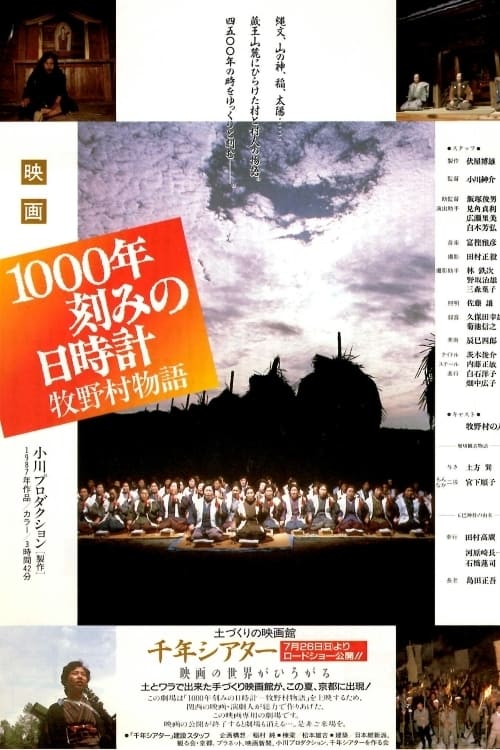
The movie compiles footage taken by Ogawa Production for a period of more than ten years after the collective moved to Magino village. Unique to this film are fictional reenactments of the history of the village in the sections titled "The Tale of Horikiri Goddess" and "The Origins of Itsutsudomoe Shrine". Ogawa combines all the techniques that were developed in his previous films to simultaneously express multiple layers of time—the temporality of rice growing and of human life, personal life histories, the history of the village, the time of the Gods, and new time created through theatrical reenactment—bring them into a unified whole. The faces of the Magino villagers appear in numerous roles transcending time and space—sometimes as individuals, sometimes as people who carry the history of the village in their memories, sometimes as storytellers reciting myths, and even as members of the crowd in the fictional sequences.
1995
2004
1982

1983
2022

2010
1934

1974
No reviews yet. Be the first to share your thoughts on this movie!
Use the rating form above to leave a star rating and optional review.