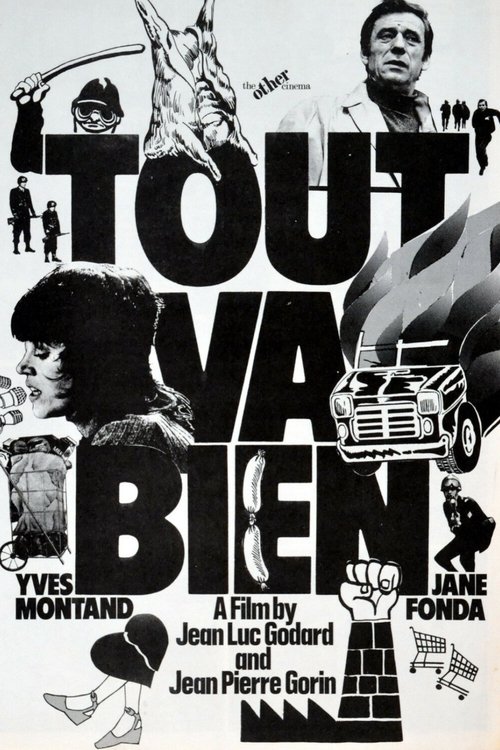
Tout Va Bien
1972
No user ratings available yet
Representation score: 6.8 out of 10

Representation Score
Good
1971
Not RatedDirector
Jean-Luc Godard, Jean-Pierre Gorin
Runtime
60 minutes
Average Rating
No ratings yetNew Showbiz Analysis
The film operates as a critical essay on class consciousness rather than a traditional narrative, emphasizing material conditions over individual identity. Its strength lies in its critique of Western institutions and capitalist structures. However, it lacks specific representation of LGBTQ+ and disability issues. While it challenges traditional gender roles, it does so through a lens of class rather than specific gender liberation.
Category Breakdown
The film does not include explicit LGBTQ+ storylines or characters who identify outside traditional gender roles. Instead, it focuses on Marxist-Leninist ideas about class struggle.
Women in the film are shown as active participants in political events rather than primarily as love interests. The movie challenges traditional gender roles by breaking down the male-dominated perspective.
The film centers on the Italian social and political context but avoids focusing solely on Western perspectives. It rejects narratives that prioritize Western dominance.
The work critically examines Western institutions, capitalism, and religious systems, presenting them as part of a broader oppressive structure.
The film does not feature characters with visible or invisible disabilities. The main focus is on the economic and social conditions of the working class.
Present on Screen
Limited or Absent
Official Synopsis
The film reveals how and why a supposedly revolutionary Italian girl has in fact fallen prey to bourgeois ideology.
1972
1971

1978
1964
1967
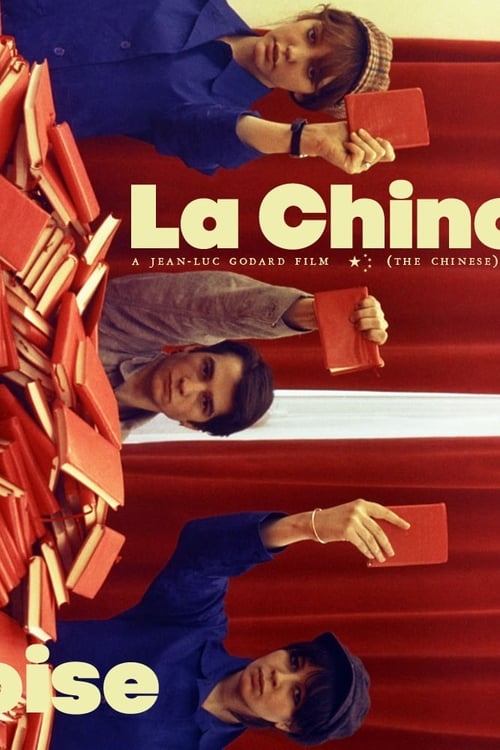
1967
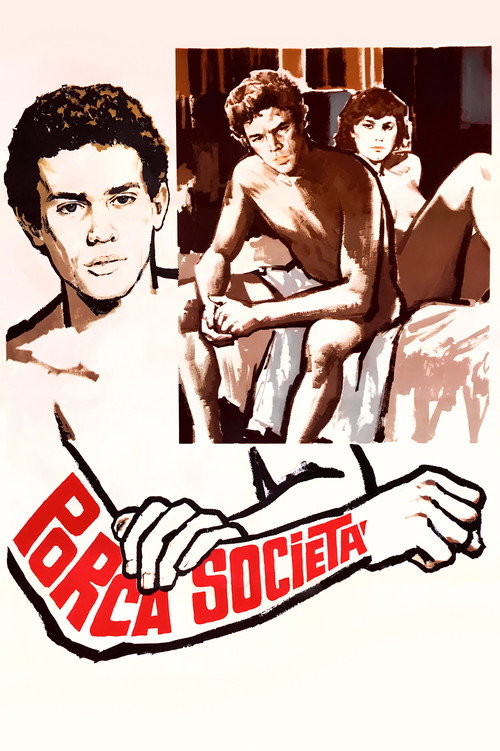
1978
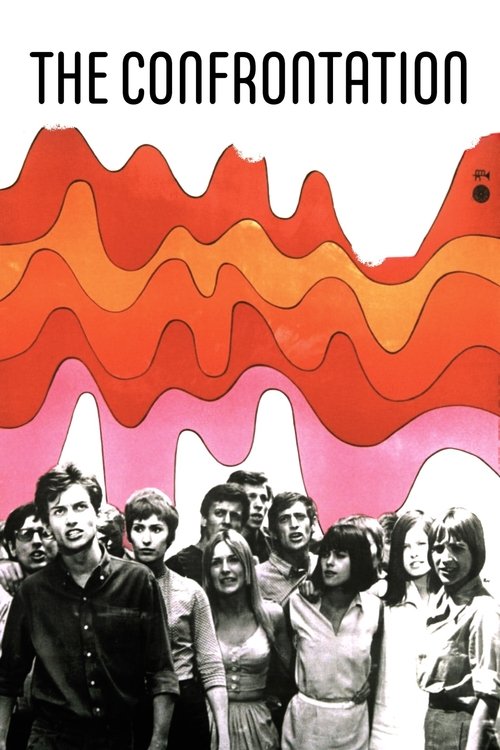
1969
No reviews yet. Be the first to share your thoughts on this movie!
Use the rating form above to leave a star rating and optional review.