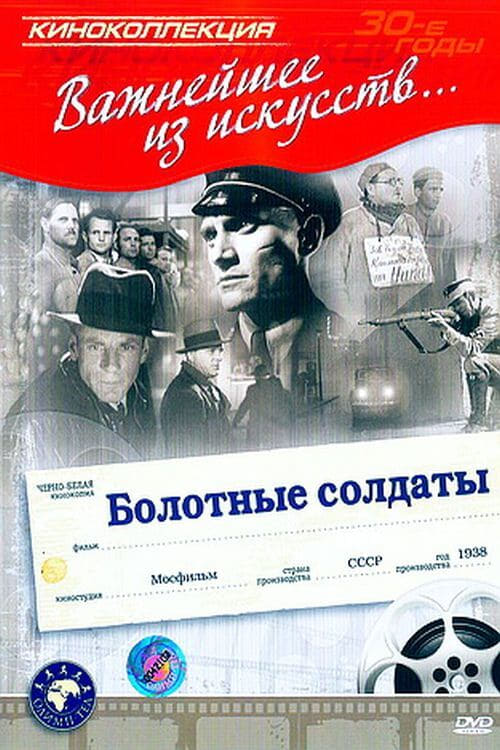
Peat-Bog Soldiers
1938
No user ratings available yet
Representation score: 2.4 out of 10
Representation Score
Fair
1942
Director
Vsevolod Pudovkin, Yuri Tarich
Runtime
64 minutes
Average Rating
No ratings yetNew Showbiz Analysis
The film serves as a profound psychological and systemic critique of social cohesion under pressure. It utilizes a narrative structure that deconstructs the myth of institutional stability and the perceived safety of the state. While the film lacks modern markers like explicit LGBTQ+ representation or diverse racial casting, it succeeds in framing the collapse of community trust as a central driver. The film's strength lies in its sophisticated portrayal of how systemic terror affects both individuals and the collective. Ultimately, the production prioritizes a critique of institutional power and the volatility of social structures over individual representation of underrepresented groups.
Category Breakdown
The film adheres closely to traditional social norms, with no depiction of LGBTQ+ identities or narratives that challenge the assumption that everyone is straight or cisgender.
The story breaks down traditional social structures, showing characters of all genders as equally vulnerable to fear and suspicion.
The film reflects a culturally uniform environment typical of 1940s Soviet productions. However, it highlights the systemic harm faced by certain groups.
The film effectively critiques established institutions and state structures, portraying traditional social order as a mechanism of terror rather than a source of safety.
There is no significant portrayal of characters with disabilities having real control over their lives. The focus remains on the collective psychological state.
Present on Screen
Limited or Absent
Official Synopsis
Brecht's play Fear and Misery of the Third Reich consists of a series of playlets, portraying National Socialist Germany of the 1930s as a land of poverty, violence, fear and pretence. Nazi antisemitism is depicted in several of the sketches, including "the Physicist", "Judicial Process", and "the Jewish Wife".
1938

1965
1944

1977
1946

1976
1943
1945
No reviews yet. Be the first to share your thoughts on this movie!
Use the rating form above to leave a star rating and optional review.