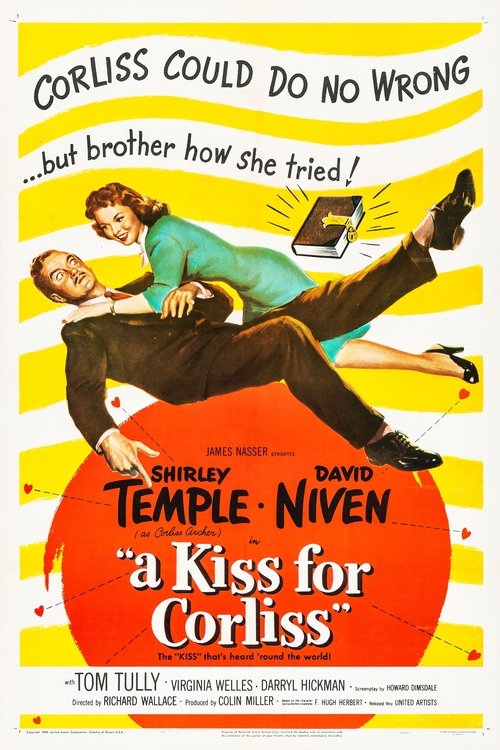
A Kiss for Corliss
1949
No user ratings available yet
Diversity score: 1.4 out of 10

1945
Director
Richard Wallace
Runtime
90 minutes
Average Rating
No ratings yetSynopsis
Film adaptation of the Broadway hit, about the comic mayhem that erupts in a small town when a 15-year old high-schooler (Shirley Temple) is wrongly suspected of being pregnant.
Overall Score
Minimal
Category Breakdown
LGBTQ+ Representation
The film adheres strictly to the heteronormative social frameworks of the 1940s. There is no presence of queer subtext or non-cisnormative identities within the narrative.
Gender Representation
While the story centers on a female protagonist, her agency is limited to domestic and social spheres. The plot reinforces traditional feminine roles by focusing on reputation and romantic misunderstandings.
Racial & Ethnic Diversity
The film depicts a homogeneous, Anglo-centric social environment. There is a notable absence of racial or ethnic diversity among the primary cast members.
Religious & Cultural Diversity
The narrative reinforces traditional Western social institutions and conventional morality. It seeks to restore the status quo rather than deconstructing family structures or class stability.
Disability Representation
There are no visible or invisible disabilities integrated into the character arcs. The story does not utilize disability as a theme or plot device.
Strengths
Areas for Improvement
AI Analysis
Kiss and Tell is a quintessential product of the 1945 studio system, designed to uphold established social and moral hierarchies. The film functions as a reinforcement of mid-century norms rather than a critique of them. The narrative lacks intersectional complexity, focusing instead on a singular, homogeneous demographic. While it provides a female lead, the character's influence remains confined to maintaining social propriety and managing reputation. Ultimately, the film serves to stabilize the status quo, offering a conventional comedy that avoids any subversion of the era's systemic social structures.
1949
1965
1942
1949
1939
1951

1944
1931

1951
1935
1950
1937
No reviews yet. Be the first to share your thoughts on this movie!
Use the rating form above to leave a star rating and optional review.