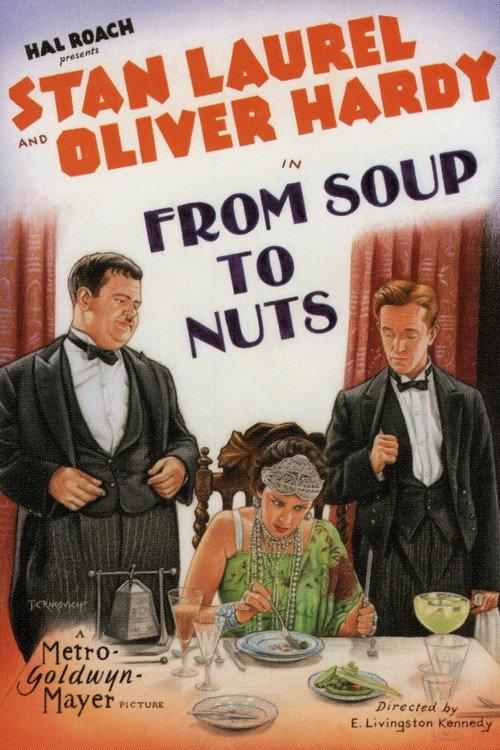
From Soup to Nuts
1928
No user ratings available yet
Representation score: 0.4 out of 10
No Poster Available
Representation Score
Minimal
1930
TV-GDirector
Edgar Kennedy
Runtime
20 minutes
Average Rating
No ratings yetNew Showbiz Analysis
This 1930 short is a conventional slapstick comedy that prioritizes situational irony over social complexity. The narrative follows a group of young men navigating the transition from school to work, using character flaws to drive humor. The film adheres strictly to the era's cinematic norms, presenting a homogeneous social environment. It lacks any intentional engagement with the way different parts of someone's identity overlap or the subversion of traditional hierarchies. Ultimately, the work functions as a standard comedic piece of its time, focusing on individual temperament and the mishaps of navigating a department store setting.
Category Breakdown
The story focuses solely on the interactions between young men. There are no depictions of LGBTQ+ identities or narratives that challenge the assumption that everyone is straight or cisgender.
Male protagonists drive the entire plot. While women appear as customers in the accessories department, they have little control over what happens to them and serve only to facilitate the male characters' comedic mishaps.
The cast appears to be a homogeneous group. The narrative lacks any indication of racial or ethnic diversity within the social settings or the main characters.
The film centers on traditional social hierarchies and the value of labor. It reinforces established commercial structures rather than exploring diverse cultural perspectives or challenging institutional norms.
No characters with physical or neurodivergent disabilities are present. The central conflicts stem from personality flaws like laziness and cluelessness rather than disability.
Present on Screen
Limited or Absent
Official Synopsis
On the train trip home from school, all the kids except Dave talk about taking a vacation trip to Lake Arrowhead; Dave wants a summer job. Alabam suggests that his uncle might hire Dave at a department store. The uncle likes Dave's attitude and tells Alabam and Mickey they should work there too. Reluctantly, Alabam takes a sales assignment in ladies' accessories, where he's charming but clueless. Mickey, lazy and on the take, sees the store detective helping himself to a chocolate bar, so he wants that job. Dave learns the hard way that the customer is always right, Mickey puts the cuffs on the wrong customer, and Lake Arrowhead looks very far away.
1928
1928
1940
1927
1924
1925
1921
1914
No reviews yet. Be the first to share your thoughts on this movie!
Use the rating form above to leave a star rating and optional review.