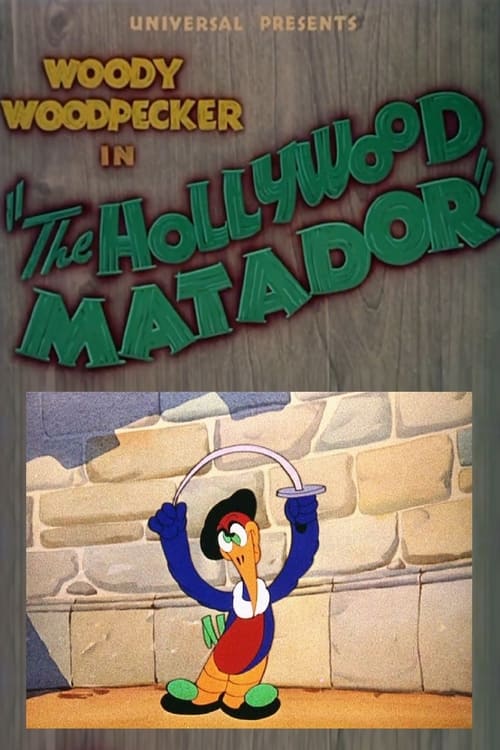
The Hollywood Matador
1942
No user ratings available yet
Diversity score: 1.5 out of 10

1952
Director
Walter Lantz
Runtime
6 minutes
Average Rating
No ratings yetSynopsis
An elderly, suicidal Woody Woodpecker reminisces about his life as a woodpecker, as his ability to peck wood has vanished, leaving his life seemingly without energy.
Overall Score
Minimal
Category Breakdown
LGBTQ+ Representation
The film lacks any depiction of non-heteronormative identities or same-sex intimacy. The narrative focuses entirely on the protagonist's individual existential struggle.
Gender Representation
There is no evidence of gendered character dynamics or the subversion of traditional hierarchies. The story centers on a single avian character.
Racial & Ethnic Diversity
As an animation featuring an anthropomorphic bird, the work does not engage with racial or ethnic casting. No diverse cast is present.
Religious & Cultural Diversity
The film departs from traditional optimistic animation tropes by exploring loss of purpose. It rejects the invincible protagonist archetype common in mid-century media.
Disability Representation
The story engages with themes of aging and physical limitation. It focuses on a character navigating a diminished physical state and loss of function.
Strengths
Areas for Improvement
AI Analysis
Born to Peck stands as a somber departure from the high-energy slapstick typically associated with the Walter Lantz studio. By focusing on an aging Woody Woodpecker facing an existential crisis, the film deconstructs a legacy icon through a lens of physical and mental decline. While the film lacks intersectional representation regarding race, gender, or orientation, it moves away from the era's standard optimism. It trades traditional comedic hierarchies for a more complex, character-driven retrospective on utility and loss. Ultimately, the work's significance lies in its thematic willingness to explore vulnerability and the loss of fundamental bodily functions, marking a shift from the invincible hero archetype.
1942
1937
1941
1935
1935
1936

1941

1935

1951
1936
1953
1948
No reviews yet. Be the first to share your thoughts on this movie!
Use the rating form above to leave a star rating and optional review.