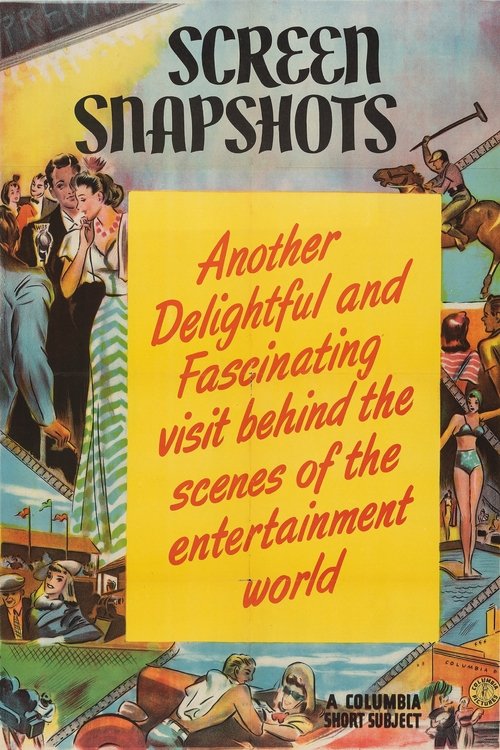
Screen Snapshots (Series 16, No. 1)
1936
No user ratings available yet
Representation score: 0.8 out of 10
Representation Score
Minimal
1937
ApprovedDirector
Ralph Staub
Runtime
10 minutes
Average Rating
No ratings yetNew Showbiz Analysis
This newsreel serves as a historical document from the 1930s, primarily promoting the prestige of Hollywood's elite. The content is observational, focusing on the geography of celebrity and high-status leisure rather than character-driven narratives. The film reinforces the social hierarchies and cultural norms of the pre-war era. By showcasing exclusive clubs and luxury hotels, it highlights a period marked by significant social exclusivity and limited diversity.
Category Breakdown
The film showcases various social venues and athletic clubs but does not include any non-binary gender identities or same-sex relationships. It promotes traditional heterosexual relationships through its depiction of leisure activities.
The documentary highlights the appearance of female celebrities in social settings, emphasizing traditional feminine roles. It does not depict masculinity in a non-traditional way.
The featured locations, such as the West Side Tennis Club, were historically segregated by race. The film reflects the homogeneous demographics of the upper class in the 1930s. It does not show any multi-layered diversity.
The narrative celebrates Western leisure activities and the Hollywood studio system. By featuring luxury hotels and golf clubs, it upholds the prestige of traditional Western institutions and celebrity culture.
The content focuses on high-energy activities like golf and tennis. It does not include any representation of individuals with disabilities.
Present on Screen
Limited or Absent
Official Synopsis
A tour of Hollywood, featuring such star frequented spots as the Vendome, the Lakeside Golf Club, the West Side Tennis Club, the Santa Anita Racetrack, the Ambassador Hotel's Cocoanut Grove, the Biltmore Bowl, and the American Legion Stadium.
1936
1938

1949
1939

1945
1935
1946
1925
No reviews yet. Be the first to share your thoughts on this movie!
Use the rating form above to leave a star rating and optional review.