Minnesota: 'Land of Plenty'
1942
No user ratings available yet
Representation score: 0.3 out of 10
Representation Score
Minimal
1941
ApprovedRuntime
9 minutes
Average Rating
No ratings yetNew Showbiz Analysis
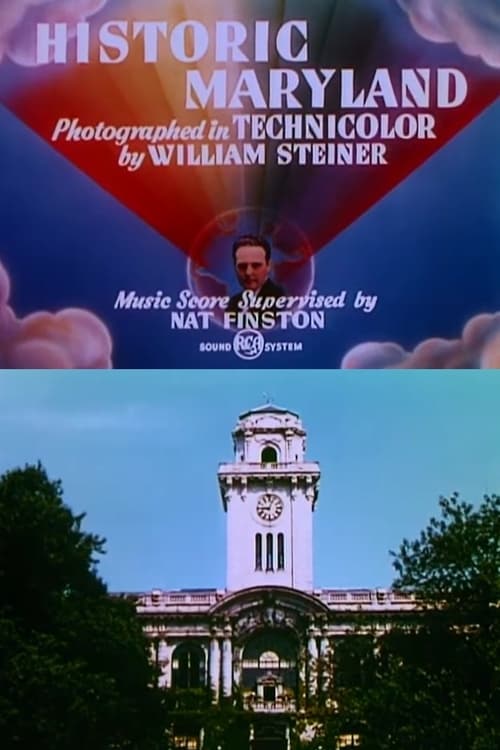
Historic Maryland serves as a mid-century travelogue designed for civic promotion rather than social critique. Its primary purpose is to highlight topographical and historical landmarks like Baltimore and Annapolis. Because the film is a period-specific documentary from 1941, it reflects the social constraints and traditional hierarchies of its time. The content is centered on institutional stability and Western heritage. Consequently, the film lacks exploration of overlapping identities, resulting in a presentation that omits diverse identities in favor of a homogeneous, historical survey.
Category Breakdown
The film does not include any focus on gender identity or sexual orientation. It follows the era's standard of excluding non-straight relationships entirely.
The story centers on historical institutions and civic structures that were predominantly male-dominated in 1941. There is a noticeable lack of women's ability to drive the story or visible female leadership.
The documentary likely presents a traditional view of Maryland's landmarks. It emphasizes Anglo-centric historical milestones, reflecting the homogeneous social norms of the era.
The film celebrates regional identity and established Western institutions like education and military government. These are presented as stable, foundational elements of the state's identity.
There is no evidence of individuals with visible or invisible disabilities being portrayed. The focus on scenery and landmarks precludes any nuanced disability narratives.
Present on Screen
Limited or Absent
Official Synopsis
This Traveltalk series short highlights such Maryland destinations as Baltimore, Johns Hopkins, Annapolis, and Fort McHenry.
1942
1942
1940
1941
1949
1950
1937
1949
No reviews yet. Be the first to share your thoughts on this movie!
Use the rating form above to leave a star rating and optional review.