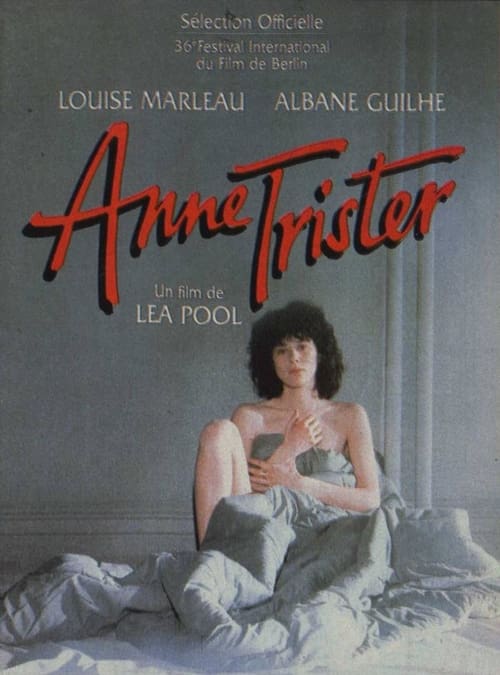
Anne Trister
1986
No user ratings available yet
Representation score: 7.3 out of 10
Representation Score
Excellent
1984
Director
Léa Pool
Runtime
89 minutes
Average Rating
No ratings yetNew Showbiz Analysis
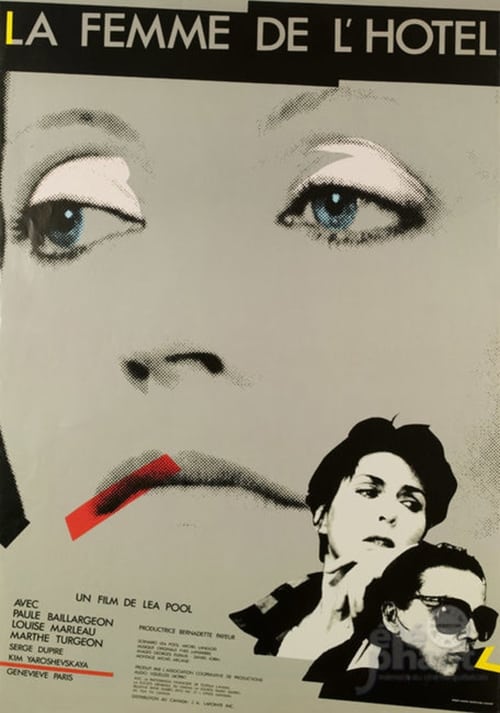
A Woman in Transit excels at centering women's ability to drive the story and professional authority. By placing a woman at the helm of a high-budget production, the film challenges the cliché of women as secondary characters. The narrative's strength lies in its psychological depth and its meta-fictional exploration of identity. It uses the intersection of two women's lives to examine complex, non-traditional interpersonal dynamics and existential crises. However, the film's focus on a localized Montreal setting limits its racial and ethnic breadth. The demographic appears predominantly French-speaking, lacking explicit evidence of multi-ethnic representation.
Category Breakdown
The film centers on a female filmmaker, allowing for an exploration of non-traditional social structures. While romantic pairings are not detailed, the focus on female autonomy suggests a departure from typical heterosexual storylines.
The narrative disrupts traditional hierarchies by placing a woman in a position of professional authority and creative control. It explores female experiences across different life stages, from the director's vigor to the existential crisis of an elderly woman.
Set in Montreal, the film appears to reflect a localized, predominantly French-speaking demographic. There is no explicit evidence of a multi-ethnic cast, suggesting a focus on a specific cultural landscape.
The film uses subjective reality to promote moral relativism and psychological complexity. By blending fiction with real-life experiences, it critiques social stability and highlights the fragility of individual existence.
The inclusion of an elderly woman experiencing suicidal thoughts provides a lens into mental health issues. The film treats her psychological vulnerability as a central narrative focus rather than a mere plot device.
Present on Screen
Limited or Absent
Official Synopsis
Even though the protagonist of the Canadian Femme De L'Hotel is a female filmmaker, one would think twice before suggesting that this effort by Swiss-born director Lea Pool is autobiographical. Paule Baillargeon portrays a well-known director who returns to her home town of Montreal to film a high-budget musical drama. At her hotel, Paule has a brief but unsettling encounter with a suicidal elderly woman (Louise Marleau). This element of the plot is briefly forgotten as we get to know the actors in Paule's current project. Then she meets the old lady again, and with mounting incredulity Paule discovers that the actual events in the woman's life mirror the fictional events in the director's film.
1986

1974
1992
1974

1973

1999
1989
1977
No reviews yet. Be the first to share your thoughts on this movie!
Use the rating form above to leave a star rating and optional review.