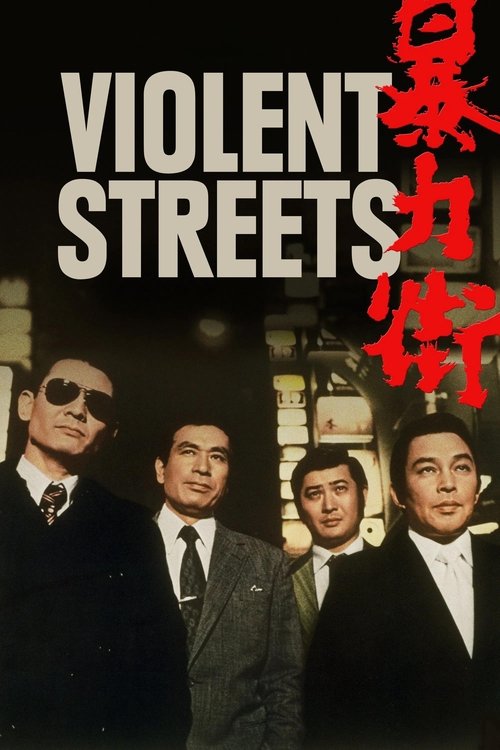
Violent Streets
1974
No user ratings available yet
Representation score: 5.2 out of 10
Representation Score
Limited
1971
Director
Yasuo Furuhata
Runtime
110 minutes
Average Rating
No ratings yetNew Showbiz Analysis
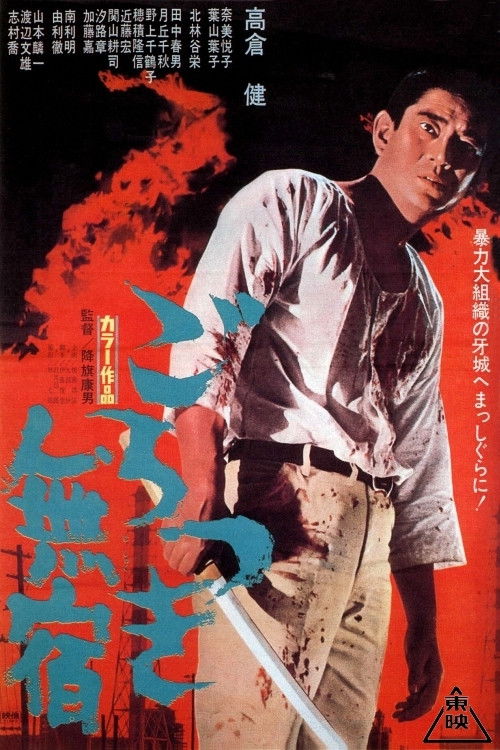
Patience Has An End is a genre-driven crime drama that explores the breakdown of traditional labor structures. It focuses on the socio-economic displacement of an individual moving from industrial labor to the criminal underworld. While the film lacks representation of gender and sexual orientation, it offers a social critique through its portrayal of systemic pressures. Ultimately, the film serves as a study of social mobility and the tension between individual ability to act and systemic pressures in mid-century Japan.
Category Breakdown
The film does not include explicit queer narratives or non-cisgender identities. It focuses on traditional masculine hierarchies within yakuza subcultures.
Male protagonists dominate the narrative, navigating patriarchal criminal structures. The story heavily emphasizes male-dominated spheres such as coal mining and organized crime.
As a Japanese production, the cast is likely homogeneous. It functions as a localized study of Japanese social strata rather than incorporating diverse ethnic backgrounds.
The film critiques traditional economic stability by showing a protagonist forced into crime due to the inadequacy of legitimate industries. It suggests that economic institutions can be predatory or insufficient for survival.
There is no documented evidence of characters with visible or invisible disabilities in this work.
Present on Screen
Limited or Absent
Official Synopsis
Young coal miner Takeda leaves Kyushu in search of a better job in Tokyo, only to fall into the lucrative yet dangerous life of a yakuza.
1974

1964
1978

1973
1975
1961

1969

2021
No reviews yet. Be the first to share your thoughts on this movie!
Use the rating form above to leave a star rating and optional review.