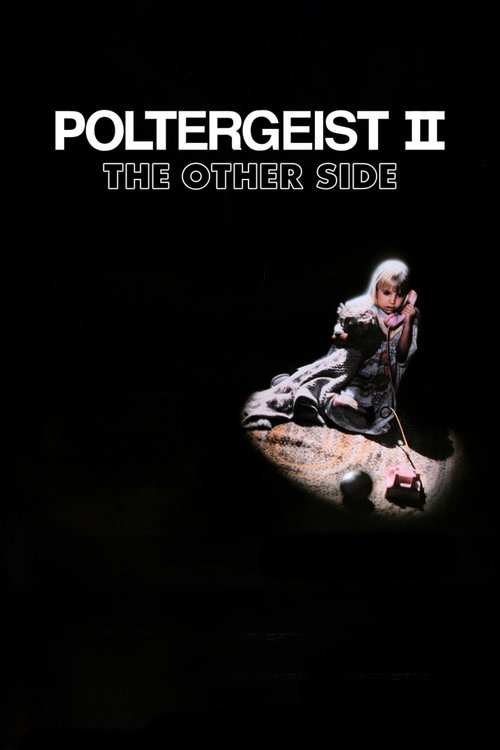
Poltergeist II: The Other Side
1986
No user ratings available yet
Representation score: 2.4 out of 10
Representation Score
Minimal
1988
PG-13Director
Gary Sherman
Runtime
98 minutes
Average Rating
No ratings yetNew Showbiz Analysis
Poltergeist III exemplifies late-1980s mainstream horror, emphasizing traditional social structures and homogeneous demographics. Its narrative architecture centers on protecting the nuclear family, limiting its scope to a specific demographic. While providing a typical supernatural thriller experience, the film does not challenge established hierarchies or introduce diverse identities.
Category Breakdown
The film strictly follows the assumption that everyone is straight or cisgender. There is no depiction of non-binary gender identities or same-sex relationships among the characters.
The story emphasizes traditional gender roles and domestic hierarchies. Female characters are primarily portrayed through maternal instincts and conventional gender expectations.
The casting and storyline focus mainly on a white, middle-to-upper-middle-class demographic. There is limited representation of different racial and ethnic backgrounds.
The film centers on the sanctity of the family unit within a traditional Western horror context. It does not critique religious or institutional norms.
There are no depictions of physical, sensory, or neurodivergent disabilities. Characters are shown as physically able-bodied.
Present on Screen
Limited or Absent
Official Synopsis
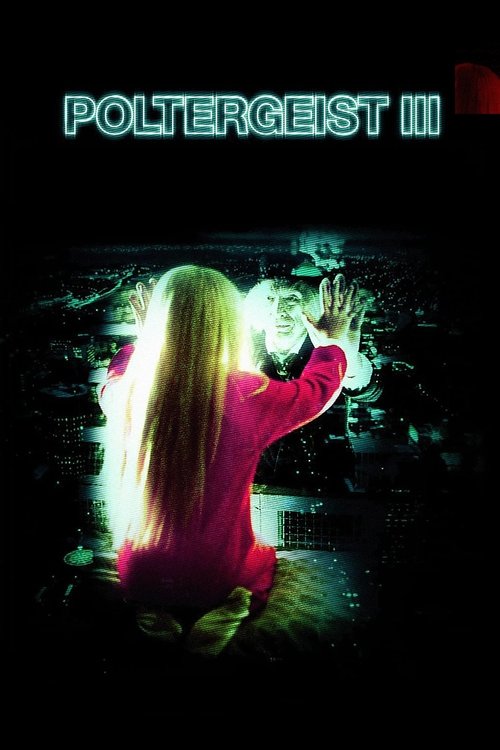
Carol Anne has been sent to live with her Aunt and Uncle in an effort to hide her from the clutches of the ghostly Reverend Kane, but he tracks her down and terrorises her in her relatives' appartment in a tall glass building. Will he finally achieve his target and capture Carol Anne again, or will Tangina be able, yet again, to thwart him?
1986
1977

1990

1976
2013
1988
1983

1978
No reviews yet. Be the first to share your thoughts on this movie!
Use the rating form above to leave a star rating and optional review.