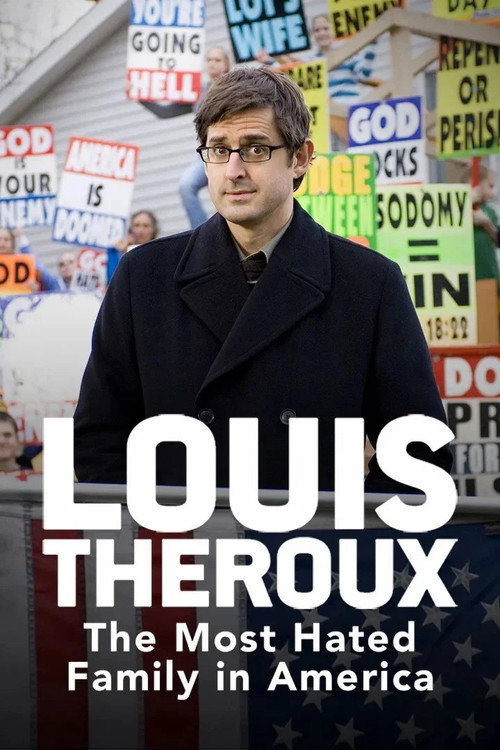
Louis Theroux: The Most Hated Family in America
2007
No user ratings available yet
Representation score: 2.3 out of 10
Representation Score
Minimal
2011
Not RatedDirector
Emma Cooper
Runtime
60 minutes
Average Rating
No ratings yetNew Showbiz Analysis
This documentary serves as an observational study of a fringe group defined by its opposition to progressive social frameworks. Low diversity scores reflect the subjects' active rejection of LGBTQ+ rights, gender equality, and pluralistic norms. The film's structure emphasizes the ideological friction of the Westboro Baptist Church over diverse representation. It captures how extreme belief systems affect familial stability and social integration rather than showcasing varied identities. Ultimately, the work is a study of social friction and ideological isolation, documenting a community that stands in direct opposition to modern societal values.
Category Breakdown
The film centers on a group that actively opposes LGBTQ+ identities using offensive slogans and anti-gay placards. It does not include narratives where LGBTQ+ individuals take control of their lives.
The Phelps family operates under a patriarchal system where men hold religious authority. Women's roles seem confined to supporting the family's religious mission and maintaining the household.
The narrative focuses on a religious sect that is predominantly of a specific American demographic. There is no blending of races or ethnicities within the core family unit.
The documentary highlights the conflict between radical religious beliefs and mainstream Western social norms. It shows how rejecting secular values and maintaining communal cohesion define the family’s identity.
There are no specific depictions of visible or invisible disabilities that drive the narrative or give characters real power.
Present on Screen
Limited or Absent
Official Synopsis
Following up on his 2007 documentary, The Most Hated Family in America, Louis Theroux returns to Topeka, Kansas, for a week-long visit with the Westboro Baptist Church. He again joins the Phelps family on their controversial pickets where they try to antagonise communities with offensive slogans and anti-gay placards. But four years on from Louis's last visit, there are signs of disarray in the Phelps clan. A series of defections of family members has shaken up the church.
2007
2016

2019
2015
2009
2011
2008
2003
No reviews yet. Be the first to share your thoughts on this movie!
Use the rating form above to leave a star rating and optional review.