
The Years Pass
1945
No user ratings available yet
Diversity score: 1.2 out of 10
1940
Director
Hans Steinhoff
Runtime
104 minutes
Average Rating
No ratings yetSynopsis
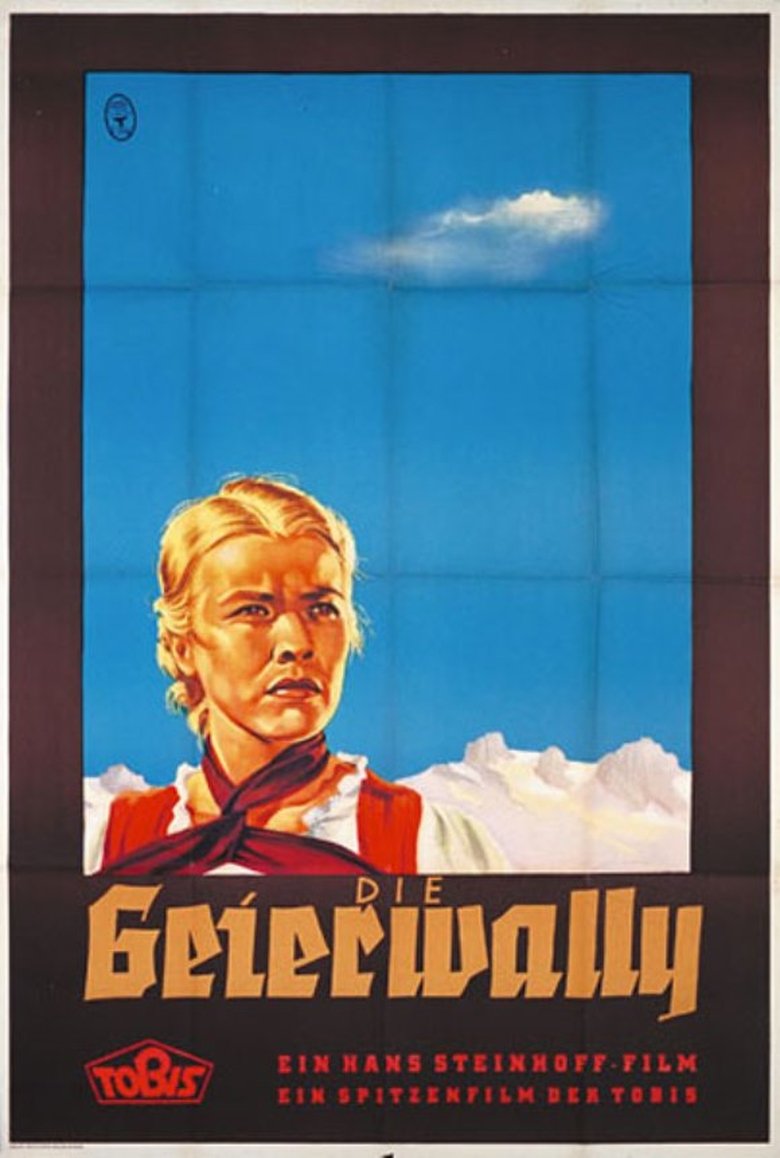
In the mountains of the Ötztal, the wealthy Fender (Eduard Köck) and Wally (Heath Hatheyer), his only daughter and heir, manage a small farm. He wants to marry the rich, but boring, Vincent (Leopold Esterle). Wally escapes to a mountain hut, where she lives alone and withdrawn. Her love belongs to the hunter, Joseph (Sepp Rist). When she unwisely takes a young vulture from its nest and is attacked by the mother, Joseph comes to her aid and from that point on, she fondly calls him her "Geierwally". He also feels attracted to her, but Wally can't escape the feeling, that the young Afra is his mistress. Mad with jealousy, Wally announces that she'll marry the one who kills Josef. Vincent wants to earn her hand and is determined to kill the Geierwally. Just in time, though, the actual relationship between Joseph and Afra is clarified.
Overall Score
Minimal
Category Breakdown
LGBTQ+ Representation
The film features no visible or implied LGBTQ+ identities. Romantic arcs remain strictly heteronormative, focusing on traditional courtship between Wally, Joseph, and Afra.
Gender Representation
Wally demonstrates agency by defying her father's patriarchal authority and rejecting a marriage of convenience. However, this rebellion serves a romantic arc rather than a systemic critique of gender hierarchies.
Racial & Ethnic Diversity
The film utilizes a highly homogeneous casting model. It lacks racial or ethnic diversity, focusing instead on an idealized Germanic and Alpine identity.
Religious & Cultural Diversity
The narrative reinforces traditional regional institutions and 'Blood and Soil' ideologies. It romanticizes a specific nationalist cultural identity centered on the sanctity of land and family.
Disability Representation
There are no prominent depictions of physical or neurodivergent disabilities. Characters function within the standard physical capabilities required by the Alpine setting.
Strengths
Areas for Improvement
AI Analysis
Die Geierwally serves as a quintessential example of mid-20th-century nationalist cinema. The narrative architecture is designed to uphold traditional hierarchies of gender, ethnicity, and culture rather than challenge them. While the female protagonist exhibits individual agency by resisting her father's control, this remains a localized character trait. It does not translate into a broader subversion of systemic power dynamics or social structures. The film's heavy emphasis on cultural homogeneity and the romanticization of traditionalist values results in a lack of progressive representation.
1945
1944
1965
1941
1919

1951
1918
1954
1937

1967
1941
1915
No reviews yet. Be the first to share your thoughts on this movie!
Use the rating form above to leave a star rating and optional review.