Citizen K
2019
No user ratings available yet
Diversity score: 5.8 out of 10
1993
Director
Simon Hartog
Runtime
93 minutes
Average Rating
No ratings yetSynopsis
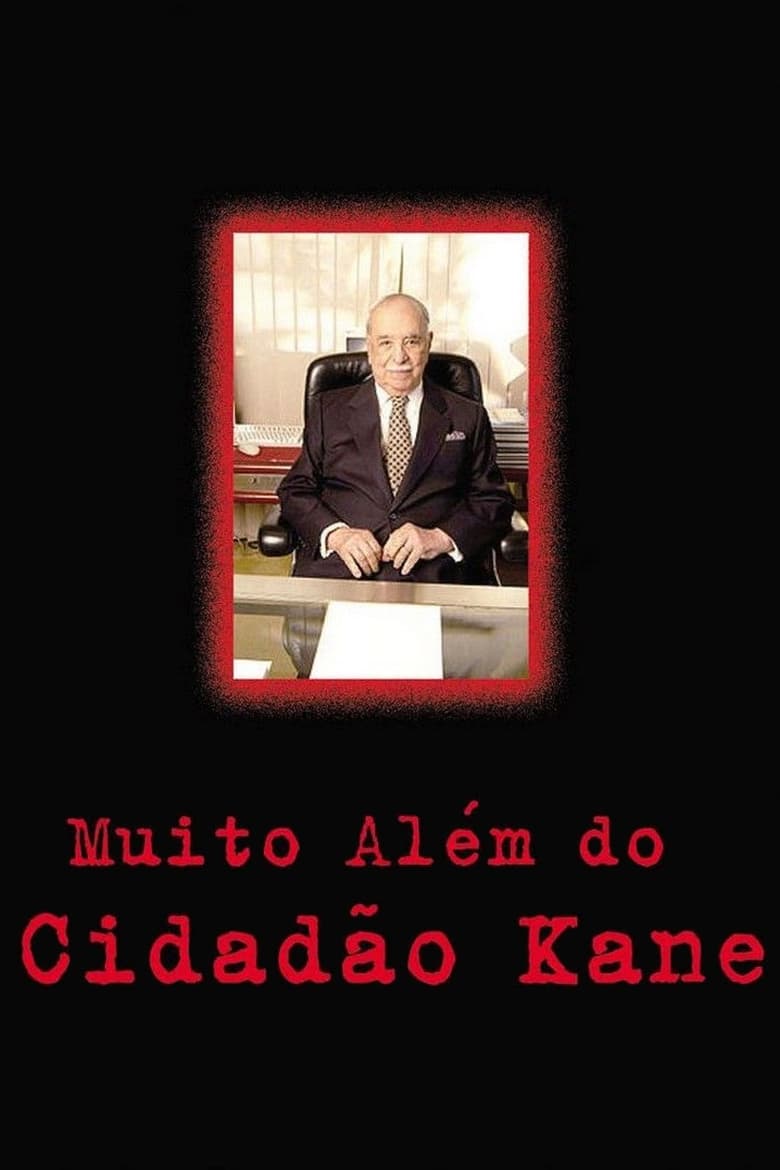
Beyond Citizen Kane (1993) is a British documentary film directed by Simon Hartog, produced by John Ellis, and broadcast on Channel 4. It details the dominant position of the Rede Globo media group in the Brazilian society, discussing the group's influence, power, and political connections. Globo's president and founder Roberto Marinho came in for particular criticism, being compared with fictional newspaper tycoon Charles Foster Kane, created by Orson Welles for the 1941 film Citizen Kane. According to the documentary, Marinho's media group engages in the same Kane wholesale manipulation of news to influence the public opinion.
Overall Score
Good
Category Breakdown
LGBTQ+ Representation
The film focuses on media ownership and political influence in Brazil. It does not explicitly center queer narratives or identities, though it avoids reinforcing heteronormative tropes.
Gender Representation
The narrative centers on male-dominated spheres of media ownership and political leadership. It operates within a patriarchal framework by focusing on the 'Great Man' theory of media moguls.
Racial & Ethnic Diversity
The documentary provides agency to non-Western perspectives by centering its critique on a Brazilian conglomerate. This disrupts Eurocentric lenses by examining power structures in the Global South.
Religious & Cultural Diversity
The film excels in critiquing Western institutional frameworks through an anti-capitalist lens. It aligns with post-colonial critiques by examining how centralized media acts as a tool for systemic control.
Disability Representation
There is no discernible evidence regarding the representation of physical or neurodivergent identities within the documentary's focus.
Strengths
Areas for Improvement
AI Analysis
Beyond Citizen Kane is a sophisticated investigative documentary that challenges the myth of media neutrality. It succeeds by deconstructing the intersection of media ownership and political hegemony in Brazil, offering a vital critique of centralized information control. The film's strength lies in its structural analysis of capitalism and its ability to disrupt Eurocentric perspectives. By focusing on the Rede Globo group, it provides a platform for examining how global media structures impact the Global South. However, the film's narrative architecture is limited by its focus on patriarchal power structures. The emphasis on male media moguls results in low visibility for gender and LGBTQ+ identities.
2019

2003
2013

2002

2018
2019
2012
2006
2021
2015
2019
2004
No reviews yet. Be the first to share your thoughts on this movie!
Use the rating form above to leave a star rating and optional review.