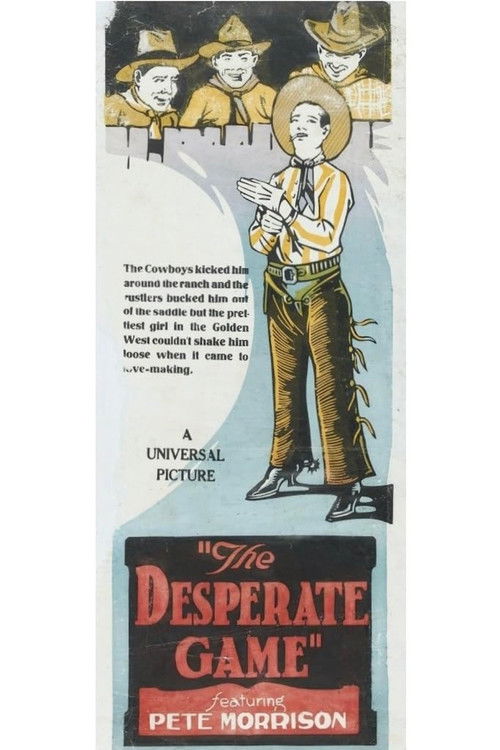
The Desperate Game
1926
No user ratings available yet
Representation score: 1.1 out of 10
Representation Score
Minimal
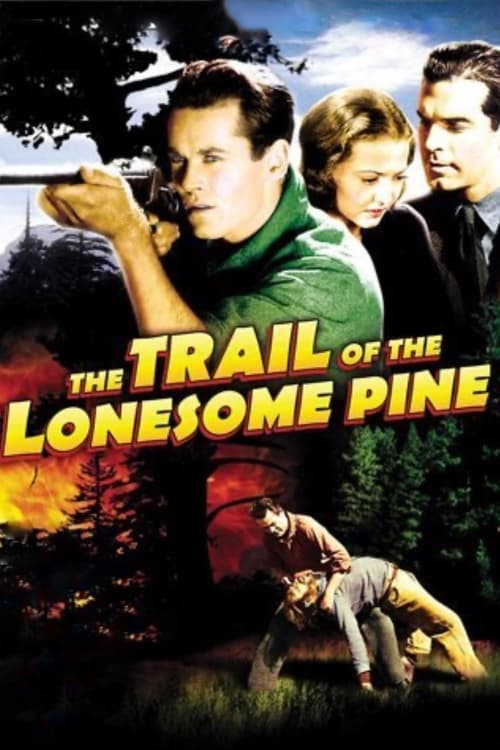
1936
NRDirector
Henry Hathaway
Runtime
96 minutes
Average Rating
No ratings yetNew Showbiz Analysis
The film reflects the 1930s Hollywood style, emphasizing regional folklore and romantic drama over diverse representation. It adheres to traditional social hierarchies and conventional storytelling methods. While the narrative explores the conflict between traditional mountain life and modern industry, it lacks moral complexity. Characters and social structures remain largely homogeneous and predictable by modern standards. Overall, the production mirrors the limited scope of mid-century Hollywood, focusing on clan conflict rather than challenging identity-based hierarchies.
Category Breakdown
The film does not include any LGBTQ+ identities or subtext. Romantic relationships are strictly heterosexual.
Sylvia Sidney plays a significant role, but her actions are primarily reactive to the male-driven feud. Female characters are often tied to romantic plots.
The film portrays a culturally uniform view of the Appalachian region. It does not address racial diversity or non-Anglo-Saxon perspectives.
The plot examines the tension between traditional farming communities and industrialization. It upholds conventional Western values emphasizing family loyalty and regional identity.
The film does not feature any characters with visible or invisible disabilities. The focus is on the physical and emotional aspects of the central conflict.
Present on Screen
Limited or Absent
Official Synopsis
A well-established tale of a long-running feud between two mountain clans.
1926
1930
1940
1946

1923
1940

1941
1960
No reviews yet. Be the first to share your thoughts on this movie!
Use the rating form above to leave a star rating and optional review.