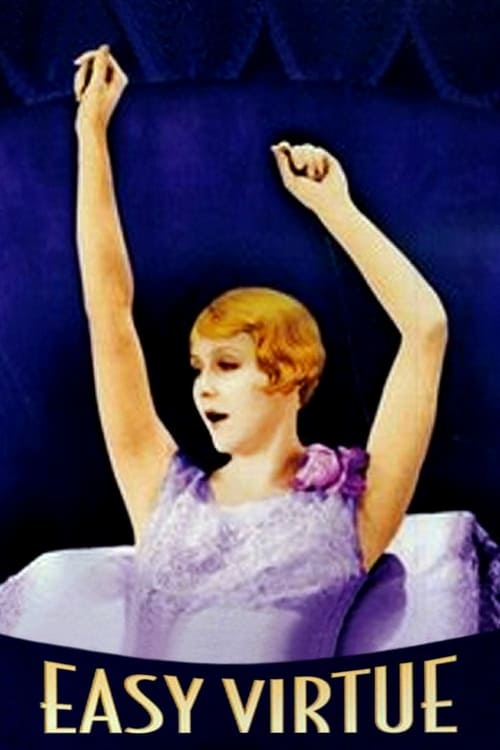
Easy Virtue
1928
No user ratings available yet
Diversity score: 4.9 out of 10

1927
Director
Lois Weber
Runtime
72 minutes
Average Rating
No ratings yetSynopsis
The prohibition is in full swing and Egypt Hagen, a new woman, is the constant subject of controversy in her religious small town. After a scandalous night of partying leaves her publicly shamed, she finds unlikely companionship in the town's new reverend. As their bond intensifies under the watchful eye of concerned townsfolk, her sullied reputation threatens his standing as a respected clergyman.
Overall Score
Fair
Category Breakdown
LGBTQ+ Representation
The narrative focuses on a romantic tension between a female lead and a male clergyman. There is no explicit evidence of queer identities or non-heteronormative characters.
Gender Representation
The film centers on Egypt Hagen, a 'new woman' who challenges traditional social constraints. Her agency in navigating public shame disrupts conventional hierarchies of female submissiveness.
Racial & Ethnic Diversity
The setting appears to be a homogeneous religious small town during Prohibition. There is no evidence of a multi-ethnic cast or the subversion of Anglo-Saxon norms.
Religious & Cultural Diversity
The story critiques institutionalized morality by pitting a scandalous individual against a respected clergyman. It favors human-centric ethics over rigid religious dogma and social pressure.
Disability Representation
The available information contains no mention of characters with visible or invisible disabilities.
Strengths
Areas for Improvement
AI Analysis
Lois Weber’s direction brings a significant focus on the complexities of womanhood and social morality. By centering a 'new woman' archetype, the film actively challenges the restrictive social mores of the 1920s. The narrative excels in its critique of institutionalized religious structures and its emphasis on female agency. It moves beyond simple archetypes to explore moral complexity through its protagonist. However, the film lacks visible diversity in terms of race and LGBTQ+ identities. The setting suggests a homogeneous social structure typical of the era, limiting its broader demographic representation.
1928
1927

1926
1929
1927
1934

1929
1927
1931
1932

1932
1925
No reviews yet. Be the first to share your thoughts on this movie!
Use the rating form above to leave a star rating and optional review.