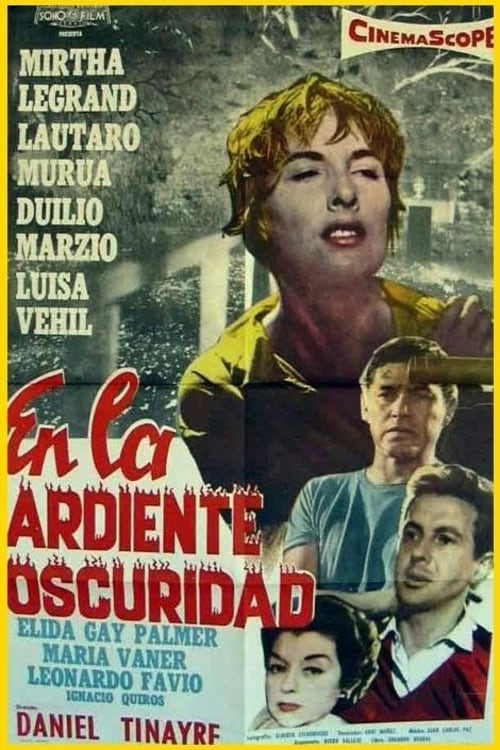
In Burning Darkness
1959
No user ratings available yet
Representation score: 6.6 out of 10
Representation Score
Good
1983
Director
Jaromil Jireš
Runtime
82 minutes
Average Rating
No ratings yetNew Showbiz Analysis
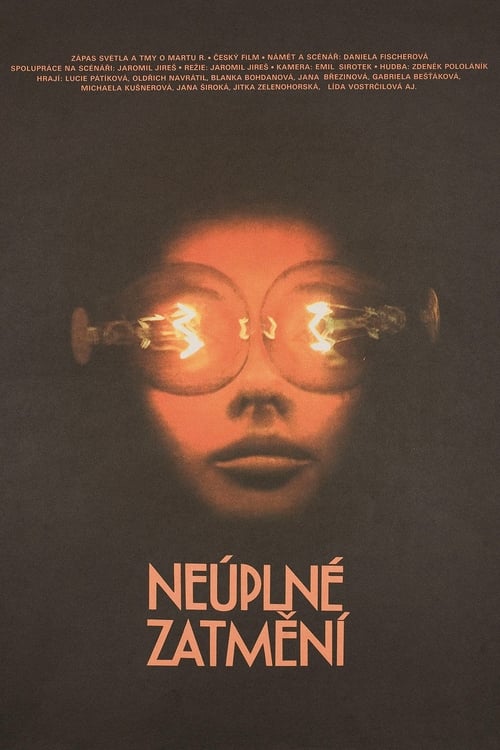
Incomplete Eclipse excels in its psychological depth, particularly regarding disability and the deconstruction of the traditional family unit. By treating blindness as a complex reality rather than a plot device, the film achieves a high level of authenticity. However, the film is limited by the demographic homogeneity typical of its era and geographic origin. The lack of visible LGBTQ+ or racial diversity prevents a higher overall score. Ultimately, the film's strength lies in its willingness to challenge social institutions and explore the nuances of human ability to act through a sophisticated, secular lens.
Category Breakdown
The film lacks explicit evidence of queer identities or non-straight relationships. The narrative focuses on interpersonal tensions between Marta, her sister, and her mother.
The story challenges traditional maternal roles by depicting the mother as a source of psychological harm rather than a nurturing figure. This shifts the focus toward the protagonist's struggle for independence.
Reflecting its 1983 Czechoslovak production context, the film appears demographically uniform. There is no evidence of intentional racial blending or non-Anglo-Saxon majority casting.
The narrative critiques traditional family units by framing maternal intentions as mechanisms of oppression. It prioritizes secular, psychological frameworks over religious solutions to navigate existential despair.
The film offers a actively leading portrayal of blindness that avoids mere pity. It explores the complex psychological reality of sensory loss and the authentic emotional struggle of adaptation.
Present on Screen
Limited or Absent
Official Synopsis
Marta (Lucie Patikova) was blinded in an accident brought on by her careless and indulgent younger sister. Now in a school for the blind, Marta keeps up her hope that she will one day see again, mainly because her mother - out of good intentions - has led her to believe that the blindness is only temporary. Before long, Marta comes to realize that her condition will last until she dies, and she begins to despair, hating her mother for giving her false hope. Only a dedicated psychologist, Dr. Mos (Oldrich Navratil) seems to have the means of retrieving Marta from her depression.
1959
1985

2004
1961
2012
1979
1985

2013
No reviews yet. Be the first to share your thoughts on this movie!
Use the rating form above to leave a star rating and optional review.