
Paprika
1932
No user ratings available yet
Representation score: 1.0 out of 10
Representation Score
Limited
1932
Director
Robert Siodmak
Runtime
95 minutes
Average Rating
No ratings yetNew Showbiz Analysis
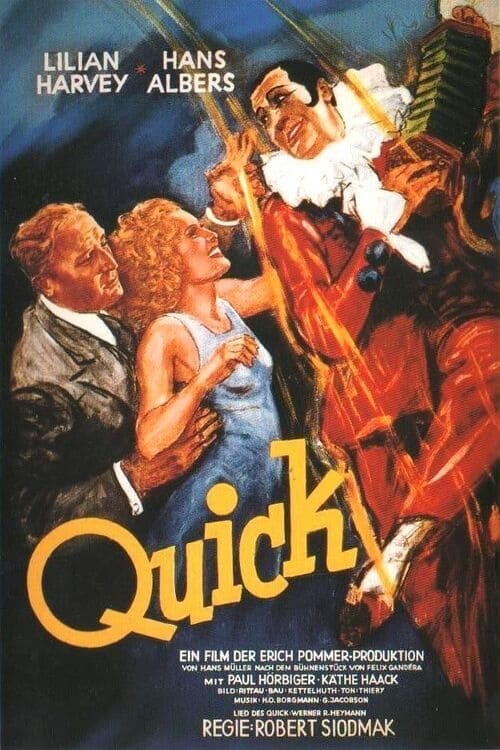
Quick is a period-specific romantic comedy that relies heavily on the clichés of mistaken identity. The narrative structure is built around a central romantic pursuit, which limits its engagement with broader social identities. While the film provides a window into early 1930s theatrical culture, it does not attempt to challenge the social hierarchies or demographic norms of its era. The focus remains strictly on individual romantic resolution. Ultimately, the film functions as a standard escapist piece, reflecting the traditional social constraints and demographic homogeneity prevalent in European cinema at the time.
Category Breakdown
The story follows a traditional romantic pursuit between Eva and Quick. There is no evidence of queer subtext or non-assuming gender matches what was assigned at birth identities within the plot.
Eva possesses emotional ability to act as she navigates conflicting romantic interests. However, the plot remains rooted in conventional heterosexual romantic clichés.
The film reflects the demographic homogeneity typical of 1932 European cinema. No evidence of racial blending or diverse casting is present.
The vaudeville setting emphasizes escapism over systemic critique. The narrative focuses on individual romantic misunderstandings rather than challenging religious or social institutions.
There is no information regarding characters with visible or invisible disabilities in the narrative.
Present on Screen
Limited or Absent
Official Synopsis
Lilian Harvey plays Eva, a young girl taking some time in a health spa and spending her evenings in the town's vaudeville theatre enamoured by a heavily made-up clown called Quick. Quick takes a shine to her and tries to woo her without make-up and masquerading as the theatre's manager. Unable to resolve her feelings for Quick and the theatre manager, Eva is angered when she finally learns that they are one and the same.
1932

1926
1932
1928
1926
1937
1933
1933
No reviews yet. Be the first to share your thoughts on this movie!
Use the rating form above to leave a star rating and optional review.