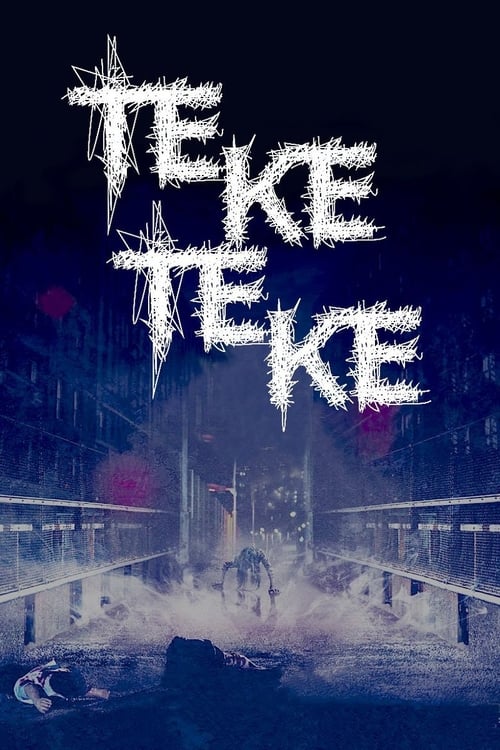
Teke Teke
2009
No user ratings available yet
Diversity score: 2.4 out of 10

2007
NRDirector
Koji Shiraishi
Runtime
90 minutes
Average Rating
No ratings yetSynopsis
Legend holds that 30 years ago, a suburban town was terrorized by the spirit of a woman whose horrid face had been grotesquely disfigured. Roaming the streets wearing a long coat and carrying large scissors, the spirit would approach her young victims and, while removing the mask, ask if she was pretty. The victim’s response would almost always lead to their violent death.
Overall Score
Limited
Category Breakdown
LGBTQ+ Representation
The film lacks visible LGBTQ+ characters or narratives. The story focuses strictly on the interaction between a supernatural entity and her victims.
Gender Representation
A powerful female figure drives the plot as a monstrous slasher archetype. This agency serves as a source of terror rather than a subversion of gendered power dynamics.
Racial & Ethnic Diversity
The production is a culturally specific Japanese work set in a homogeneous environment. It prioritizes local folklore over intersectional casting or diverse ethnic representation.
Religious & Cultural Diversity
The narrative centers on traditional folklore and the preservation of an urban legend. It avoids socio-political commentary or critiques of religious and social structures.
Disability Representation
The antagonist is defined by a grotesque physical disfigurement. This depiction functions as a tool for horror and visual terror rather than a nuanced portrayal of disability.
Strengths
Areas for Improvement
AI Analysis
Koji Shiraishi’s film is a localized exploration of Japanese urban folklore that prioritizes atmospheric dread over social complexity. It functions primarily within the established tropes of the supernatural slasher subgenre, using a central mythos to drive the narrative. While the film features a female antagonist with significant plot agency, this role is rooted in the predator-prey dynamic of horror rather than a meaningful deconstruction of gender hierarchies. The characters exist within a conventional social framework that does not challenge traditional roles. Ultimately, the film serves as a faithful adaptation of a national myth. It lacks the intersectional depth or systemic critique necessary to move beyond standard genre conventions, focusing instead on the terror of the 'othered' figure.
2009
2004

2009
2016

2024
2012

2005

2007

2006
2007
2004
2007
No reviews yet. Be the first to share your thoughts on this movie!
Use the rating form above to leave a star rating and optional review.