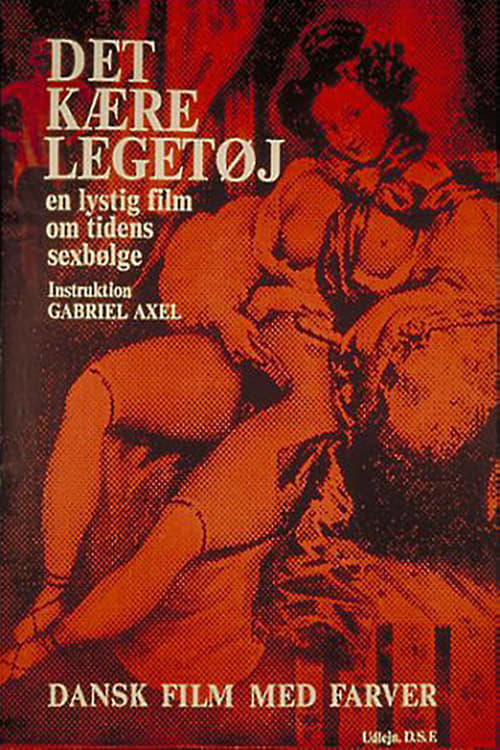
Sex and the Law
1968
No user ratings available yet
Diversity score: 5.2 out of 10
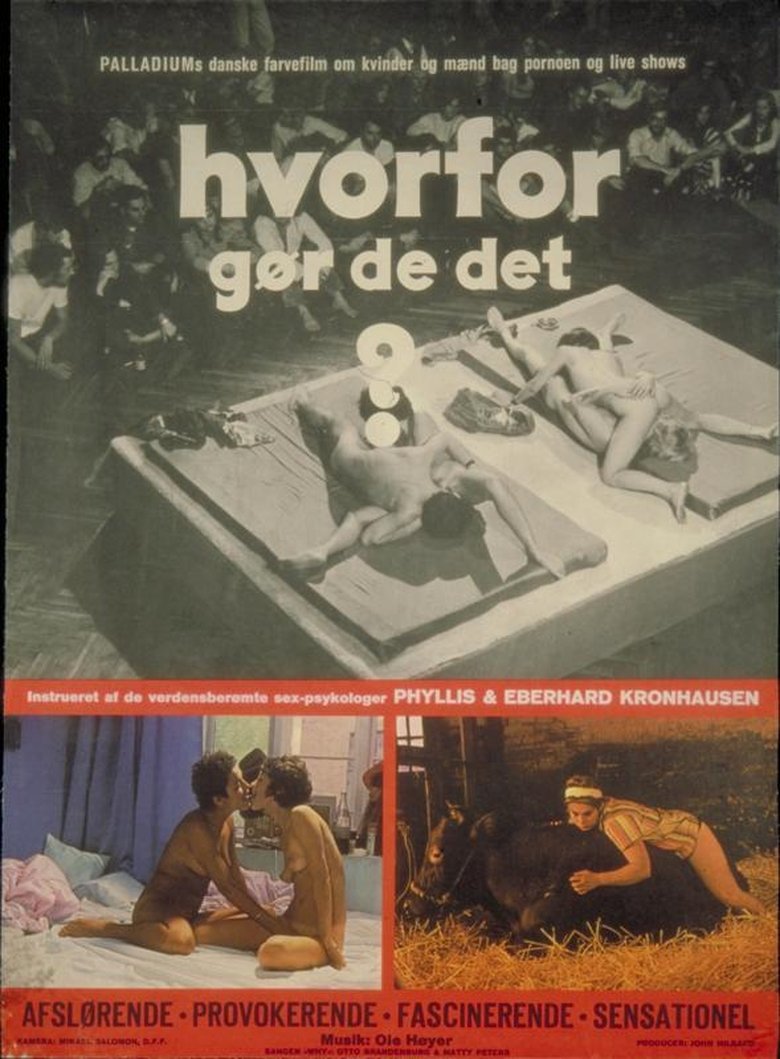
1971
Director
Phyllis Kronhausen, Eberhardt Kronhausen
Runtime
90 minutes
Average Rating
No ratings yetSynopsis
"Why Do They Do It ?" preached that it was decent to be a sexual creature. A panel discussion in the Student Association as a kind of frame, you watch various so-called live shows and you met actors like Effie Schou, Søren Strømberg, Dale Robinson and Keld Rex Holm. A lot of attention was given to Bodil Joensen, a very pet-friendly young lady, who would like to enjoy a bull named Sofus.
Overall Score
Fair
Category Breakdown
LGBTQ+ Representation
The film uses a panel discussion format to challenge heteronormative social constraints. While specific depictions of same-sex intimacy are not detailed, the central thesis promotes sexual liberation and disrupts traditional hierarchies.
Gender Representation
The work subverts traditional roles by centering discussions on sexual agency and bodily autonomy. It presents individuals as active participants in their desires rather than domestic or submissive figures.
Racial & Ethnic Diversity
The cast and participants reflect a localized, homogeneous demographic typical of a 1971 Danish production. There is no evidence of intentional intersectional casting or non-white majority representation.
Religious & Cultural Diversity
The film demonstrates progressive cultural framing by prioritizing secularism and subjective morality. It utilizes an academic setting to deconstruct social taboos and challenge established Western institutional norms.
Disability Representation
The film provides no evidence regarding the inclusion or portrayal of characters with physical or neurodivergent disabilities.
Strengths
Areas for Improvement
AI Analysis
Why Do They Do It? serves as a provocative sociological inquiry into human sexuality. It succeeds in its mission to advocate for sexual liberation and individual agency, moving away from the conservative moralities of the early 1970s. However, the film's impact is limited by its demographic homogeneity. While it disrupts sexual hierarchies, it lacks racial and disability-based intersectionality, remaining rooted in a specific European cultural context. Ultimately, the documentary is a culturally progressive piece that prioritizes intellectual debate over traditional social decorum, even if its casting remains largely unvaried.
1968
2013
1970

2012

2007
1984

2014

1997
2007
1975
1964
1989
No reviews yet. Be the first to share your thoughts on this movie!
Use the rating form above to leave a star rating and optional review.