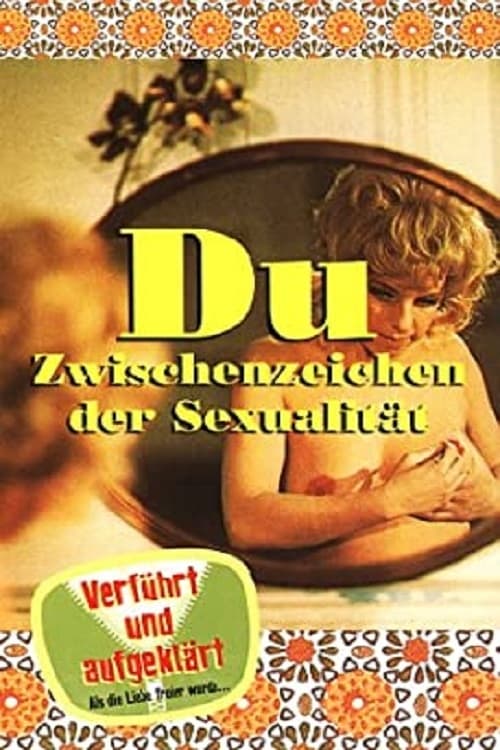
Du - Zwischenzeichen der Sexualität
1968
No user ratings available yet
Representation score: 4.0 out of 10
Representation Score
Fair
1989
18Director
Reginald Puhl
Runtime
83 minutes
Average Rating
No ratings yetNew Showbiz Analysis
This documentary serves as a meta-commentary on historical media rather than a contemporary narrative. Its diversity profile is heavily dictated by the limitations of the 1960s and 70s archival footage it analyzes. The film's strength lies in its critical distance, using irony to challenge the social and educational hierarchies of the past. However, the subject matter inherently lacks the multi-layered representation found in modern productions. Ultimately, the work functions as a study of historical norms, highlighting the demographic and social homogeneity of mid-century German sex education cinema.
Category Breakdown
The film examines archival footage from the 1960s and 70s. During this time, mainstream media often assumed everyone was straight or cisgender, which likely resulted in limited visibility for LGBTQ+ identities within the source material.
The documentary critiques the rigid and patronizing ways gender roles were historically presented. It uses a retrospective gaze to challenge the authoritative male voices common in mid-century instructional media.
The archival footage likely reflects the demographic homogeneity of 1960s and 70s Germany. There is a notable lack of representation reflecting multiple aspects of identity characteristic of mainstream educational productions from that period.
The film adopts a postmodern stance by treating state-sanctioned morality with irony. It deconstructs the perceived moral certainty and authority of traditional pedagogical structures from previous generations.
There is no evidence that neurodivergence or physical disabilities are central themes. The archival survey does not appear to address these specific character arcs or topics.
Present on Screen
Limited or Absent
Official Synopsis
German cinemas were flooded with sex education films in the 60s and 70s. What was shown in cinemas then and was meant seriously, is today rather unintentionally funny.
1968
1965
2007

2019
1968

1971
1976
1983
No reviews yet. Be the first to share your thoughts on this movie!
Use the rating form above to leave a star rating and optional review.