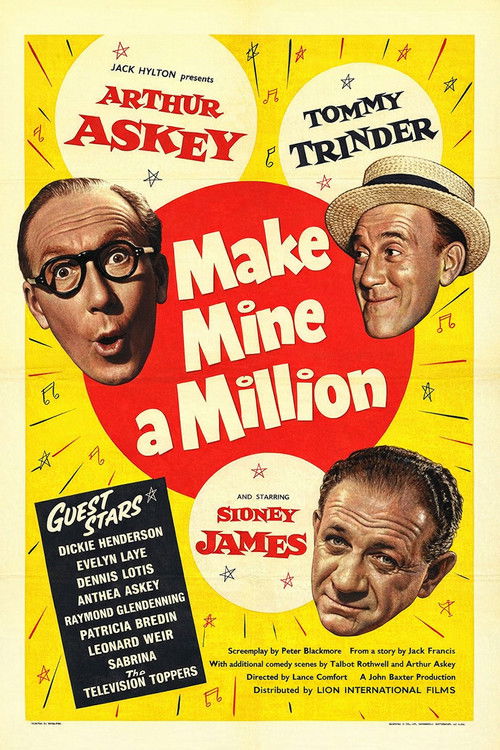
Make Mine a Million
1959
No user ratings available yet
Representation score: 1.2 out of 10

Representation Score
Minimal
1970
RDirector
Jim Clark
Runtime
94 minutes
Average Rating
No ratings yetNew Showbiz Analysis
Every Home Should Have One is a period-specific comedy that operates within the conventional social frameworks of 1970. The narrative focuses on the clash between modern advertising impulses and traditional social decorum, specifically through the lens of a husband and wife's professional and moral disagreements. Because the film centers on a domestic struggle over consumerism and television morality, it lacks the intentionality needed to disrupt traditional hierarchies. The representation remains rooted in the era's standard social structures, offering little in the way of diverse perspectives.
Category Breakdown
The film does not include any characters with non-straight or non-cisgender identities, nor does it feature any same-sex relationships or intimacy. The story focuses on domestic conflicts and advertising ethics rather than LGBTQ+ themes.
The plot centers on a traditional marital tension between Teddy and his wife. While the wife holds a position of authority, the conflict relies on established social roles from the 1970s.
The narrative reflects the homogeneous social structures typical of its 1970 release. There is no visible evidence of a multi-ethnic cast or diverse racial backgrounds.
The film explores the friction between capitalism and social morality through a comedic lens, focusing on consumerism rather than a deep critique of Western institutions.
There is no information regarding the inclusion or portrayal of characters with physical or neurodivergent disabilities.
Present on Screen
Limited or Absent
Official Synopsis
Teddy works for a large advertising company. Given the seemingly impossible task of selling frozen porridge, he decides to produce commercials that make the product seem sexy. This leads him to confrontation with the "Keep Television Clean" movement, of which his wife is a senior member.
1959
1978

1968
1969
1951
1958
1961
1958
No reviews yet. Be the first to share your thoughts on this movie!
Use the rating form above to leave a star rating and optional review.