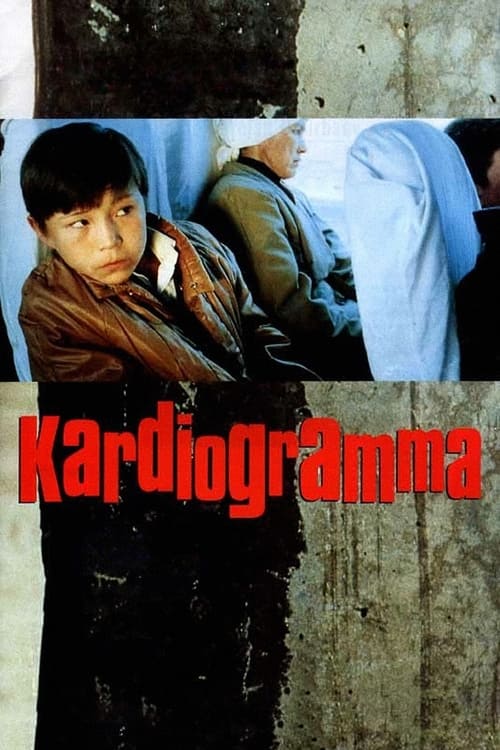
Cardiogram
1995
No user ratings available yet
Diversity score: 6.4 out of 10

1996
Director
Ben Sombogaart
Runtime
108 minutes
Average Rating
No ratings yetSynopsis
Memo is a nine-year-old boy who lives in Turkey with his mother and little sister, while his father works in a Netherlands seaport. When war looms near his family home, Memo's father moves the family to be with him in the Netherlands. Memo is unhappy at having to leave his village, his best friend, Mustafa, and his job as a mail boy. Once installed in his father's basement flat, Memo begins his own protest at being removed from his home by refusing to speak.
Overall Score
Good
Category Breakdown
LGBTQ+ Representation
The film lacks explicit depictions of LGBTQ+ identities or non-heteronormative relationships. The narrative focus remains strictly on the immigrant experience and the central familial unit.
Gender Representation
The story offers a nuanced view of the domestic sphere. While the father manages the family's relocation, the mother and daughter are vital to the emotional landscape and psychological toll of migration.
Racial & Ethnic Diversity
By centering a Turkish family in a Dutch landscape, the film disrupts the norm of homogeneous white protagonists. It provides a sophisticated commentary on preserving cultural identity within a Western structure.
Religious & Cultural Diversity
The narrative critiques Western integration processes through the protagonist's silence. It prioritizes the difficult reality of the outsider facing systemic disruption caused by geopolitical instability.
Disability Representation
Memo’s elective mutism is treated as a tool of autonomy rather than a biological deficit. The film avoids tropes by focusing on communicative breakdown caused by environmental stressors.
Strengths
Areas for Improvement
AI Analysis
The film excels at portraying the complexities of the migrant experience, moving beyond simple relocation stories to explore the friction between cultural roots and Western institutional structures. It uses the protagonist's silence as a powerful narrative device to represent individual agency against systemic upheaval. While the film provides strong ethnic and cultural depth, it lacks representation in other areas. The focus on the nuclear family and the specific immigrant journey leaves little room for LGBTQ+ or broader gender-diverse perspectives. Ultimately, the work succeeds as a psychological study of displacement. It treats the protagonist's refusal to speak not as a weakness, but as a deliberate form of resistance against assimilation.
1995

2014

2015

2005

2002

2018

2010

1984

2005

2024

2005

2014
No reviews yet. Be the first to share your thoughts on this movie!
Use the rating form above to leave a star rating and optional review.