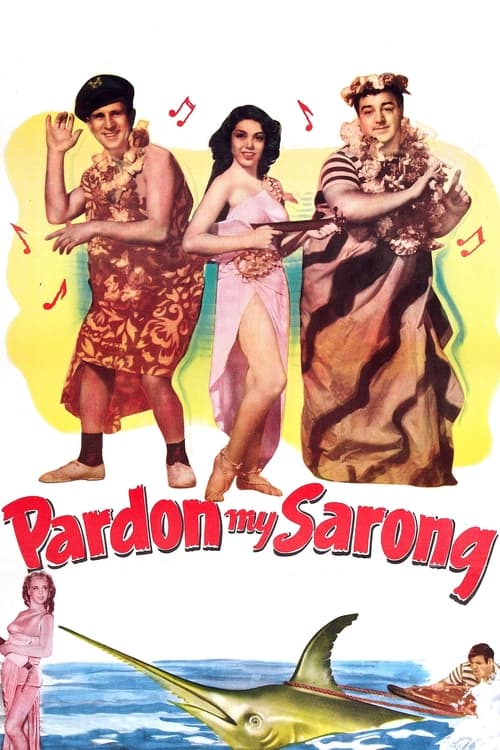
Pardon My Sarong
1942
No user ratings available yet
Diversity score: 2.7 out of 10
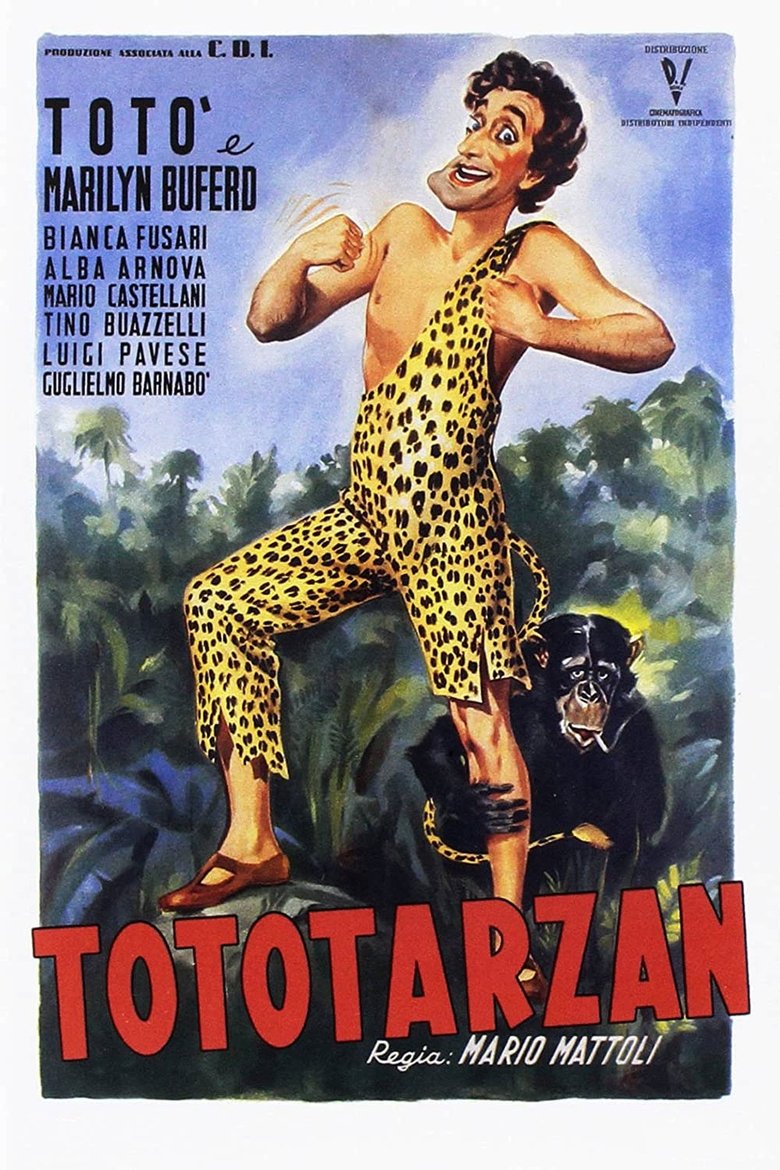
1950
Director
Mario Mattoli
Runtime
87 minutes
Average Rating
No ratings yetSynopsis
Roaming the vast jungles of Congo with his best friend, Bongo the gorilla, Antonio della Buffas, a mysterious man whom the natives call the "white monkey", is utterly unaware that he is the long-lost son of a wealthy explorer. Then, three opportunists manage to capture and bring the white savage to civilisation, bent on getting their hands on his immense fortune.
Overall Score
Limited
Category Breakdown
LGBTQ+ Representation
The film lacks any evidence of non-heteronormative identities or same-sex intimacy. The narrative focus remains strictly on the protagonist's lineage and the pursuit of wealth.
Gender Representation
The story centers on a male protagonist and a male-coded dynamic with a gorilla. It follows a traditional masculine adventure arc without evidence of female agency.
Racial & Ethnic Diversity
The film utilizes colonial-era archetypes, such as the 'white monkey' and 'natives' in the Congo. This framing reinforces Western-centric hierarchies and traditional colonialist perspectives.
Religious & Cultural Diversity
The narrative relies on a dichotomy between 'civilization' and 'the jungle.' This framework historically reinforces Western institutional superiority rather than critiquing systemic oppression.
Disability Representation
There is no mention of characters with visible or invisible disabilities within the narrative.
Strengths
Areas for Improvement
AI Analysis
Tototarzan is a mid-century adventure-comedy that leans heavily on established colonial-era tropes. The plot follows a 'fish-out-of-water' archetype, moving a character from a perceived primitive setting into civilization. The film prioritizes traditional narrative structures and situational humor over social commentary. It reinforces mid-century perspectives on class and civilization rather than challenging them. Ultimately, the work functions as a product of its time, utilizing archetypes that uphold Western-centric hierarchies and traditional social roles.
1942
1982
2008
1963
1944
1933
1955
1943
1985
1933
1942
1930
No reviews yet. Be the first to share your thoughts on this movie!
Use the rating form above to leave a star rating and optional review.