Donatella
1956
No user ratings available yet
Representation score: 4.5 out of 10
Representation Score
Limited
1959
Director
Mario Soldati
Runtime
103 minutes
Average Rating
No ratings yetNew Showbiz Analysis
Mario Soldati’s comedy serves as a classic social satire, prioritizing the critique of class-based aspirations over modern identity-based narratives. It highlights the absurdity of bureaucracy and the rigidity of social hierarchies through the lens of a man's failed ascent in his career. While the film offers a nuanced look at how institutional structures lead to human dysfunction, it remains firmly rooted in the traditional demographic frameworks of 1959 Italy. The representation focuses on class tension rather than diverse identities.
Category Breakdown
The film adheres to the social norms of mid-20th century. It focuses on traditional romantic relationships and assumes everyone is straight or cisgender, without including any stories about LGBTQ+ individuals or non-binary identities.
The story revolves around a male-dominated system. Female characters such as Celeste mainly serve as catalysts for male ambitions or romantic interests rather than having their own independent roles.
Set in a provincial Italian town, the cast is mostly uniform. The film reflects the demographics of its historical setting without intentionally mixing races.
The film provides a sophisticated critique of institutional bureaucracy and rigid state regulations. It explores the tension between personal ethics and the strictness of laws within systemic structures.
There is no significant focus on physical disabilities or neurodivergence. The protagonist's obsession with order is portrayed as a professional flaw rather than a representation of disability.
Present on Screen
Limited or Absent
Official Synopsis
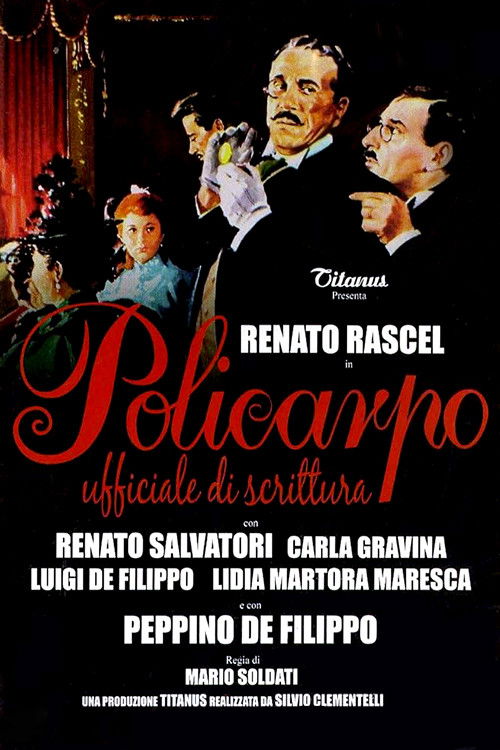
Policarpo De Tappetti is a calligrapher who works under the orders of Don César Pancarano de Rondò. For many years, Policarpo has been seeking a promotion and a raise that never comes, and, it seems, will never come. One day, Jerónimo, the son of Don César, meets Celeste, the daughter of Policarpo, and falls in love with her. Policarpo sees in that relationship the solution to his aspirations at work, and does everything in his power to make this relationship fruitful. Don César, who presumes to be a count, sees with very bad eyes that his son meets a girl from such a different social position, and does just the opposite. But the efforts made by both parties will be of no use, since Celeste has fallen in love with Mario Marquetti, a "specialized mechanic" (typist) who is giving private lessons in the offices of the businessman Franquinet .
1956
1977
1959
1976
1945
1961
1955

1957
No reviews yet. Be the first to share your thoughts on this movie!
Use the rating form above to leave a star rating and optional review.