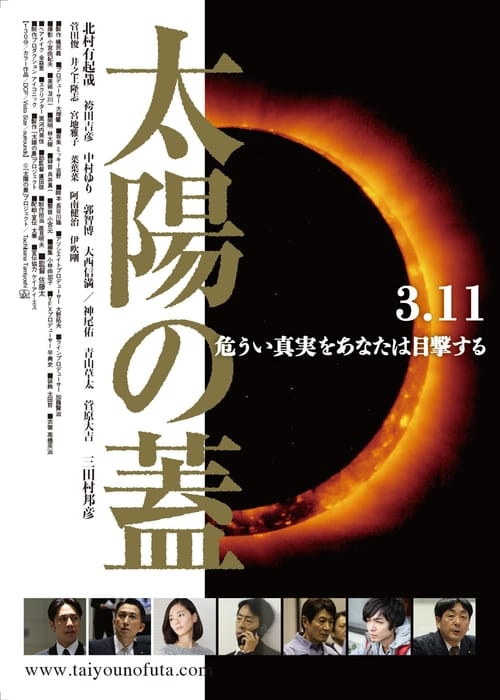
The Seal Of The Sun
2019
No user ratings available yet
Representation score: 3.8 out of 10
Representation Score
Good
2012
Not RatedDirector
Sion Sono
Runtime
133 minutes
Average Rating
No ratings yetNew Showbiz Analysis
Sion Sono’s film is a critique of social structures rather than a study of diverse identities. It excels at deconstructing the sanctity of the state and the family, offering a postmodern view of moral relativism during a crisis. However, the film lacks demographic breadth. The focus on a localized Japanese catastrophe results in minimal racial and LGBTQ+ representation, and disability is often used as a tool for tension rather than character's ability to drive the story. Ultimately, the work prioritizes the dissolution of societal order over the exploration of specific identity groups.
Category Breakdown
The film centers on the survival of a family unit without focusing on LGBTQ+ identities. During the chaos, social boundaries become blurred, but there are no explicit non-straight character arcs.
Gender hierarchies are disrupted as survival scenarios make traditional roles ineffective. Women play a significant role, but the film's emphasis on violence can sometimes overshadow nuanced character development.
The cast is predominantly homogeneous, reflecting the localized Japanese setting of the disaster. The film lacks intentional racial diversity or characters who reflect more than one aspect of diversity within its domestic focus.
The film critiques the state and family as protective entities, portraying authority figures as inadequate or corrupt. This challenges the perceived stability of traditional institutions.
Physical and psychological traumas resulting from the disaster serve primarily as plot drivers. These vulnerabilities often function to heighten tension rather than offering nuanced explorations of lived experience.
Present on Screen
Limited or Absent
Official Synopsis
An old couple, their only son, the son's wife, a young man and his lover live peacefully in a village. Then, a terrifying earthquake strikes that causes a nearby nuclear station to explode. The residents must evacuate, but the family lives on a farm, with only half of the area designated as an evacuation area.
2019

1955

2016

1960

2021
1983

2008

1962
No reviews yet. Be the first to share your thoughts on this movie!
Use the rating form above to leave a star rating and optional review.