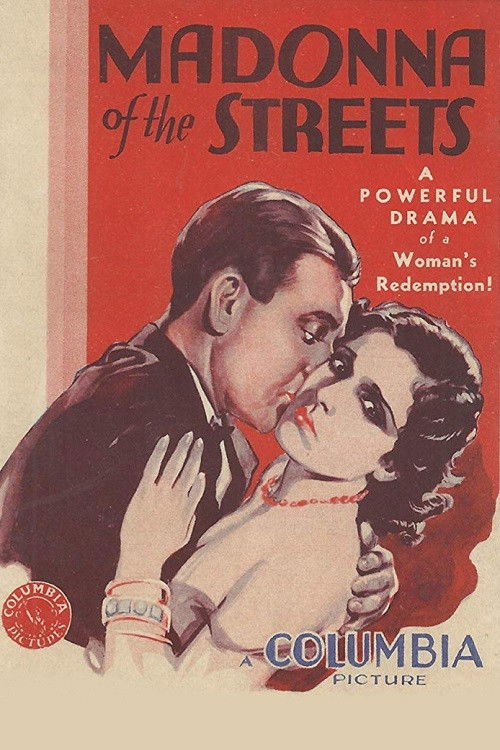
Madonna of the Streets
1930
No user ratings available yet
Representation score: 0.0 out of 10
Representation Score
Minimal
1930
PassedDirector
Guthrie McClintic
Runtime
70 minutes
Average Rating
No ratings yetNew Showbiz Analysis
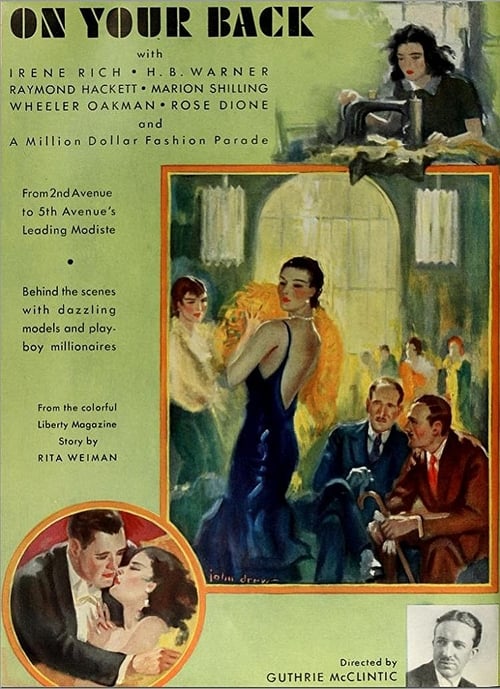
On Your Back is a product of the early sound era, following the standard dramatic conventions of 1930. While it features a prominent female star in Irene Rich, the film lacks complexity or intentional narrative subversion. The production adheres to the era's systemic constraints, characterized by homogeneous casting and traditional social hierarchies. There is no evidence of the film challenging the status quo or providing representation for underrepresented identities. Ultimately, the work functions as a standard studio-era drama that reinforces the period's established moral and social norms rather than disrupting them.
Category Breakdown
The film does not include any characters with non-cisgender gender identities or same-sex relationships, adhering to the strict assumption that everyone is straight and cisgender.
Irene Rich plays a significant female lead, but there is no indication that her character disrupts traditional gender hierarchies or challenges patriarchal structures.
The film maintains the homogeneous casting patterns typical of the early studio era, with no evidence of a non-white majority cast or actors playing roles outside their traditional racial expectations.
The film does not critique Western institutions, capitalism, or religion. Instead, it aligns with the period's emphasis on established social and moral norms.
There is no information indicating the inclusion of characters with visible or invisible disabilities.
Present on Screen
Limited or Absent
Official Synopsis
On Your Back is a 1930 American drama film directed by Guthrie McClintic and written by Howard J. Green. The film stars Irene Rich, Raymond Hackett, H. B. Warner, Wheeler Oakman, Marion Shilling and Ilka Chase.
1930
1930
1931
1930
1930
1932
1934

1933
No reviews yet. Be the first to share your thoughts on this movie!
Use the rating form above to leave a star rating and optional review.