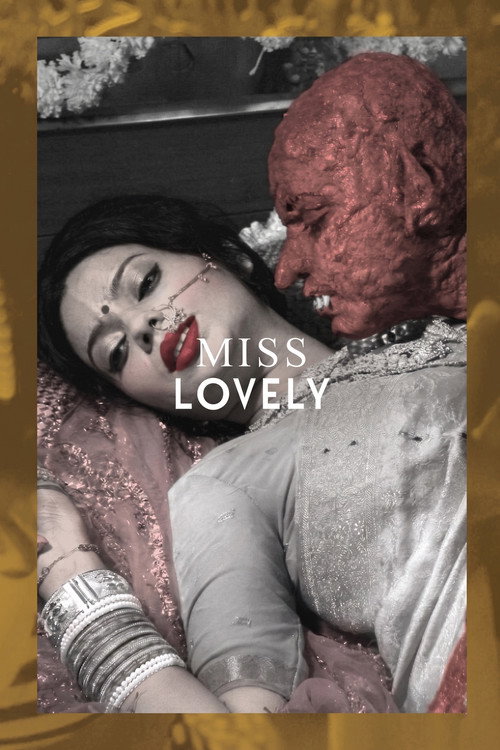
Miss Lovely
2014
No user ratings available yet
Representation score: 9.7 out of 10
Representation Score
Fair
2014
Director
Ananth Narayan Mahadevan
Runtime
113 minutes
Average Rating
No ratings yetNew Showbiz Analysis
Xposé is a period-specific dramatic thriller that emphasizes historical atmosphere and genre tension. It successfully provides a non-Western cultural perspective by focusing on the 1960s South Asian film industry. However, the film lacks explicit markers reflecting multiple aspects of identity. It does not appear to actively challenge traditional social hierarchies or provide visible representation for LGBTQ+ or disabled communities. While the setting offers a unique cultural period, the narrative remains focused on the artifice of stardom rather than broader social issues.
Category Breakdown
The film focuses on the competitive landscape of the 1960s Hindi film industry. There are no explicit LGBTQ+ characters or narratives that question the assumption that everyone is straight or cisgender.
The story centers around an era dominated by male archetypes. However, the rivalry between stars suggests that female protagonists navigate power dynamics within this male-dominated industry.
This production centers on the Hindi film industry, offering a non-Western, South Asian perspective. It explores a specific cultural period through a South Asian lens.
The film examines the grandeur and spectacle of a particular era. While it may challenge the industry's surface-level appearance, there is no evidence of religious critique or anti-capitalist themes.
There is no mention of characters with physical or neurodivergent disabilities. The narrative does not include such representation.
Present on Screen
Limited or Absent
Official Synopsis
This is a dramatic chain of events in the most glamorous ,swinging era of Hindi films... the 1960s. It was a decade when film stars tasted success and carried their larger than life screen image on to real life with unbridled pomp and splendour. It was during this time that two ambitious films were made... Ujwal Nirmal Sheetal and Reena Mera Naam. The latter became a runaway hit while the former was struggling at the box office.
2014
1991
2019

2006
2019
2017

2015
2014
No reviews yet. Be the first to share your thoughts on this movie!
Use the rating form above to leave a star rating and optional review.