At Land
1944
No user ratings available yet
Representation score: 1.6 out of 10
Representation Score
Fair
1957
Director
Hans Richter, Jean Cocteau
Runtime
80 minutes
Average Rating
No ratings yetNew Showbiz Analysis
This experimental film prioritizes intellectual disruption over broad demographic representation. By using chess pieces as metaphors for ability to act, it successfully avoids traditional gender hierarchies and the reinforcement of biological sex roles. However, the film’s reliance on non-human symbolism leads to a lack of visible racial or ethnic representation. The abstract framework avoids harmful stereotypes but fails to provide a platform for human diversity. Ultimately, the film’s strength lies in its subversion of mid-century cinematic norms through a surrealist lens that favors fluid, psychological exploration over rigid social structures.
Category Breakdown
The film's creative roots, especially those of Jean Cocteau, hint at a framework that challenges traditional assumptions about sexuality. Though there are no explicit romantic relationships, the surreal undertones question conventional sexual binaries through dream-like logic.
The narrative avoids traditional gender hierarchies by breaking down the roles of protagonist and antagonist. By using chess pieces as stand-ins, the film sidesteps the usual patterns of masculine dominance or feminine submission, focusing instead on shifting power dynamics.
The work centers on abstract symbolism rather than human characters. It lacks a visibly diverse cast, operating within a stylized, non-human metaphorical framework that does not engage with issues of racial diversity.
The film draws on Freudian theory to prioritize psychological complexity and subjective morality over traditional Western moral or religious structures. It critiques rigid, systemic logic by emphasizing the subconscious mind.
The abstract nature of the chess pieces and geometric forms provides no clear indication of physical or neurodivergent disabilities. The film does not use disability as a plot device.
Present on Screen
Limited or Absent
Official Synopsis
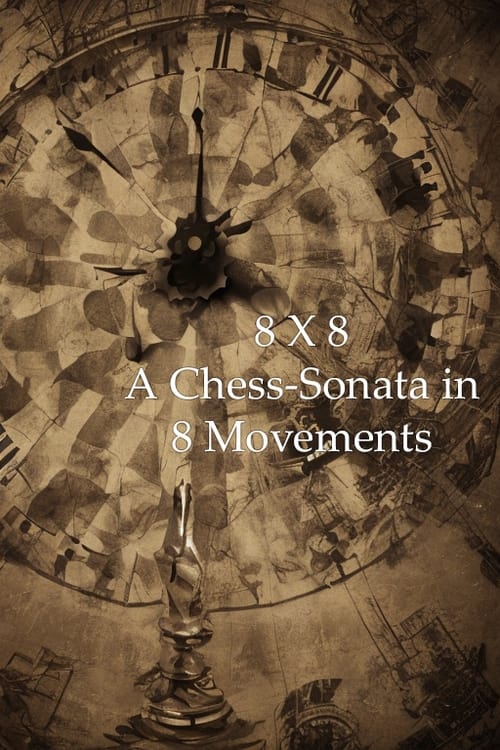
8 x 8: A Chess-Sonata in 8 Movements is an American experimental film directed by Hans Richter, Marcel Duchamp, and Jean Cocteau. Described by Richter as "part Freud, part Lewis Carroll" and filmed partially on the lawn of Duchamp's summer house in Southbury, Connecticut.
1944
1932
1968

1960
1929
1905
1988
1972
No reviews yet. Be the first to share your thoughts on this movie!
Use the rating form above to leave a star rating and optional review.