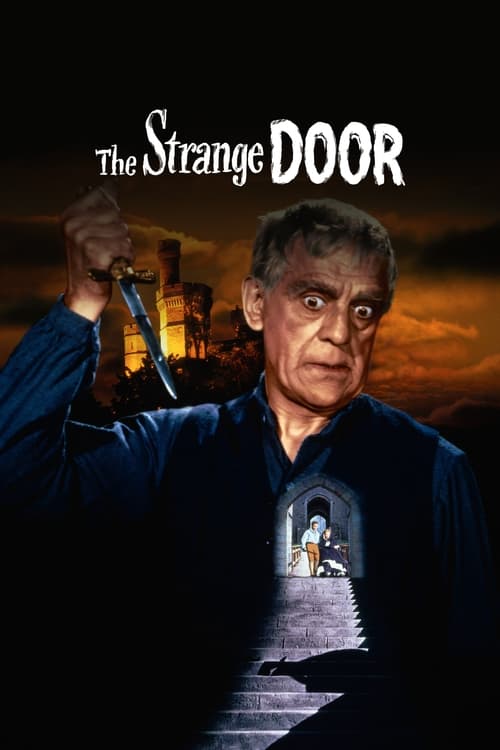
The Strange Door
1951
No user ratings available yet
Diversity score: 2.5 out of 10

1969
GPDirector
Stuart E. McGowan
Runtime
85 minutes
Average Rating
No ratings yetSynopsis
Ric Martin, an ice house worker, murders women in blind rage after a traumatic accident which occurred at his workplace. Ric’s identical twin brother, police officer Fred Martin is then assigned to investigate the case.
Overall Score
Minimal
Category Breakdown
LGBTQ+ Representation
The narrative focuses on heteronormative dynamics centered on male aggression and female victimization. There is no evidence of non-cisnormative identities or narratives that critique heteronormativity.
Gender Representation
The film adheres to regressive gender hierarchies. Female characters are primarily positioned as passive objects of desire or victims of violence, while the central conflict is driven by male dominance.
Racial & Ethnic Diversity
The film features a homogeneous, predominantly white cast. There is no evidence of race-bent casting or non-white majority ensembles within the character archetypes.
Religious & Cultural Diversity
The film operates within traditional Western genre tropes. It depicts social dysfunction through a standard thriller lens rather than providing a critique of Western institutions.
Disability Representation
There is no discernible representation of physical, neurodivergent, or sensory disabilities. The protagonist's rage is presented as a byproduct of trauma rather than a nuanced exploration of mental health.
Strengths
Areas for Improvement
AI Analysis
The Ice House functions as a late 1960s exploitation thriller that prioritizes visceral thrills over social commentary. The narrative architecture relies on conventional power dynamics, specifically casting women as victims and men as aggressors. Representation is minimal across all categories. The film lacks intersectional depth, focusing instead on individual pathology and the breakdown of fraternal bonds through a standard horror framework. Ultimately, the work does not attempt to disrupt social hierarchies or provide nuanced portrayals of marginalized groups, remaining firmly within the era's standard cinematic norms.
1951
1982
1979
1964
1983

1976
1983
1989
1971
1989
1972
1971
No reviews yet. Be the first to share your thoughts on this movie!
Use the rating form above to leave a star rating and optional review.