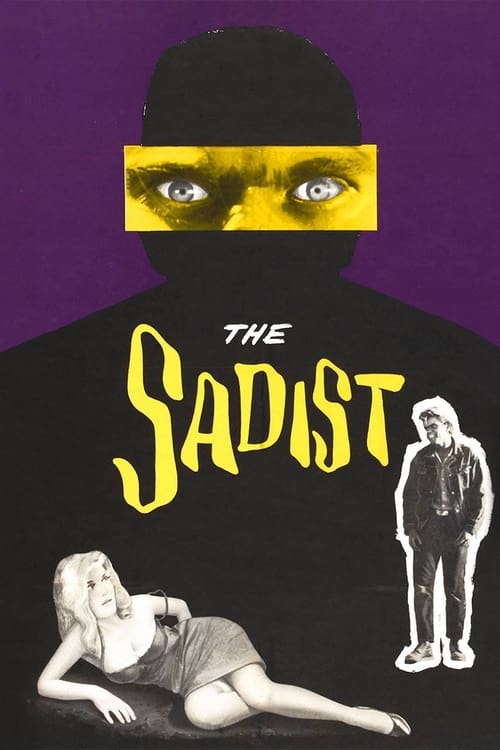
The Sadist
1963
No user ratings available yet
Diversity score: 2.4 out of 10

1964
PG-13Director
Ben Parker
Runtime
61 minutes
Average Rating
No ratings yetSynopsis
A troubled teen with an undeserved criminal past is the suspect when young women start turning up around town dead and marked up with lipstick.
Overall Score
Limited
Category Breakdown
LGBTQ+ Representation
The film lacks any visible LGBTQ+ characters or non-cisnormative identities. It follows a traditional mid-century thriller structure that offers no queer visibility.
Gender Representation
The narrative centers on young women as victims of crime. This trope positions women as passive subjects of violence rather than active agents.
Racial & Ethnic Diversity
There is no indication of a diverse or non-white cast. The film reflects the homogeneous casting standards typical of 1964.
Religious & Cultural Diversity
The story utilizes a standard crime-and-punishment framework. It aligns with conventional mid-century social mores rather than challenging them.
Disability Representation
While the protagonist is described as troubled, it is unclear if this depicts neurodivergence or mental health with agency. Specific details are absent.
Strengths
Areas for Improvement
AI Analysis
Teen-Age Strangler is a product of its era, adhering strictly to the mid-century thriller conventions of 1964. The film relies on a narrative structure where women serve primarily as victims, reinforcing traditional gender hierarchies through passive victimization. The production lacks visible intersectional representation, showing no evidence of racial diversity or LGBTQ+ characters. It appears to follow the homogeneous casting and social norms prevalent in the early 1960s. Ultimately, the film functions as a standard genre piece that does not attempt to disrupt social hierarchies or provide meaningful representation for marginalized identities.
1963
1989
1973
1970

1998
1983
1994
1973
2009
1969
2003
2000
No reviews yet. Be the first to share your thoughts on this movie!
Use the rating form above to leave a star rating and optional review.